
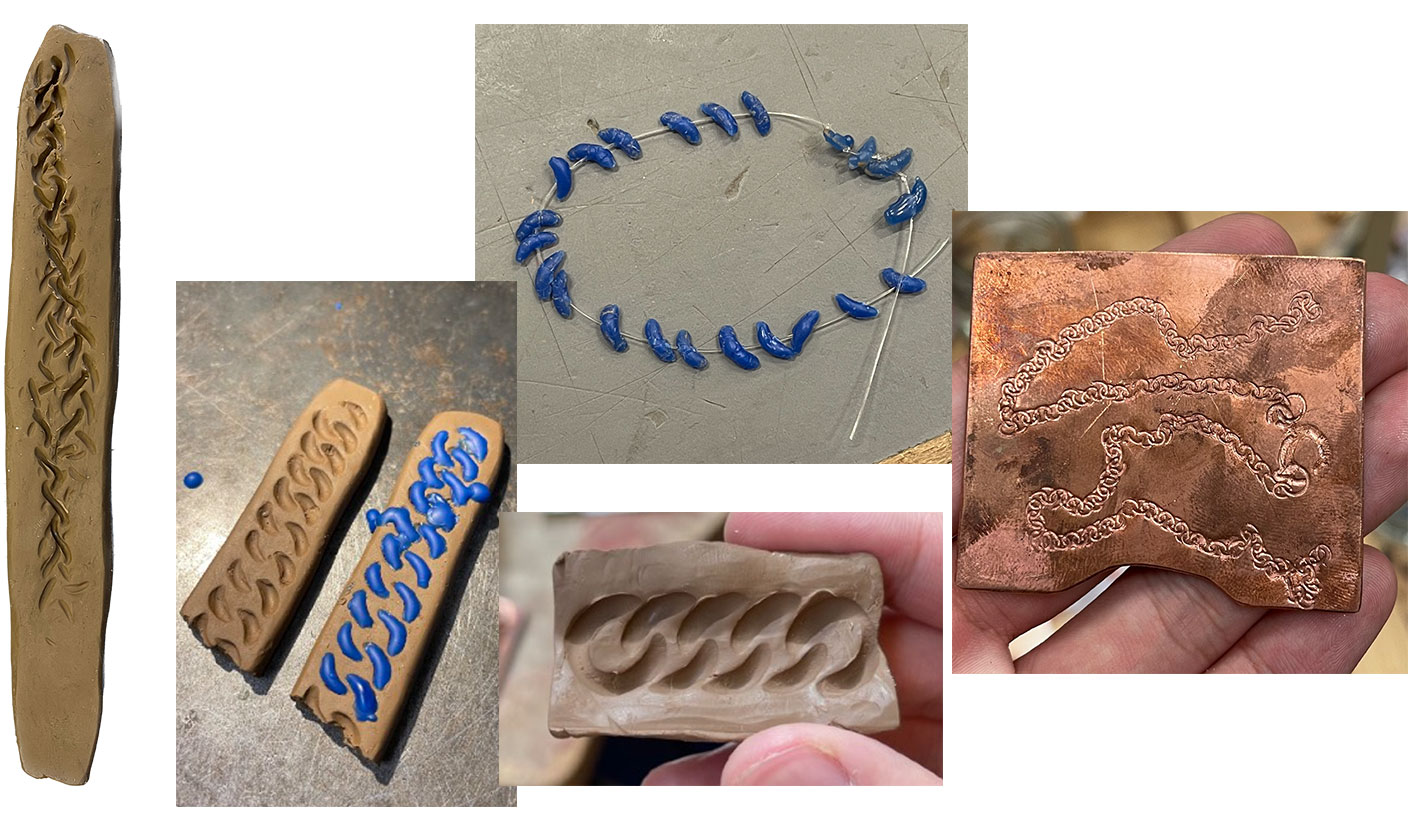
By using clay and other transfer methods, Brooklyn extracted the shape of the curb chain and cast it with wax. The imprints were then combined into new forms by reusing the traditional string of pearls.
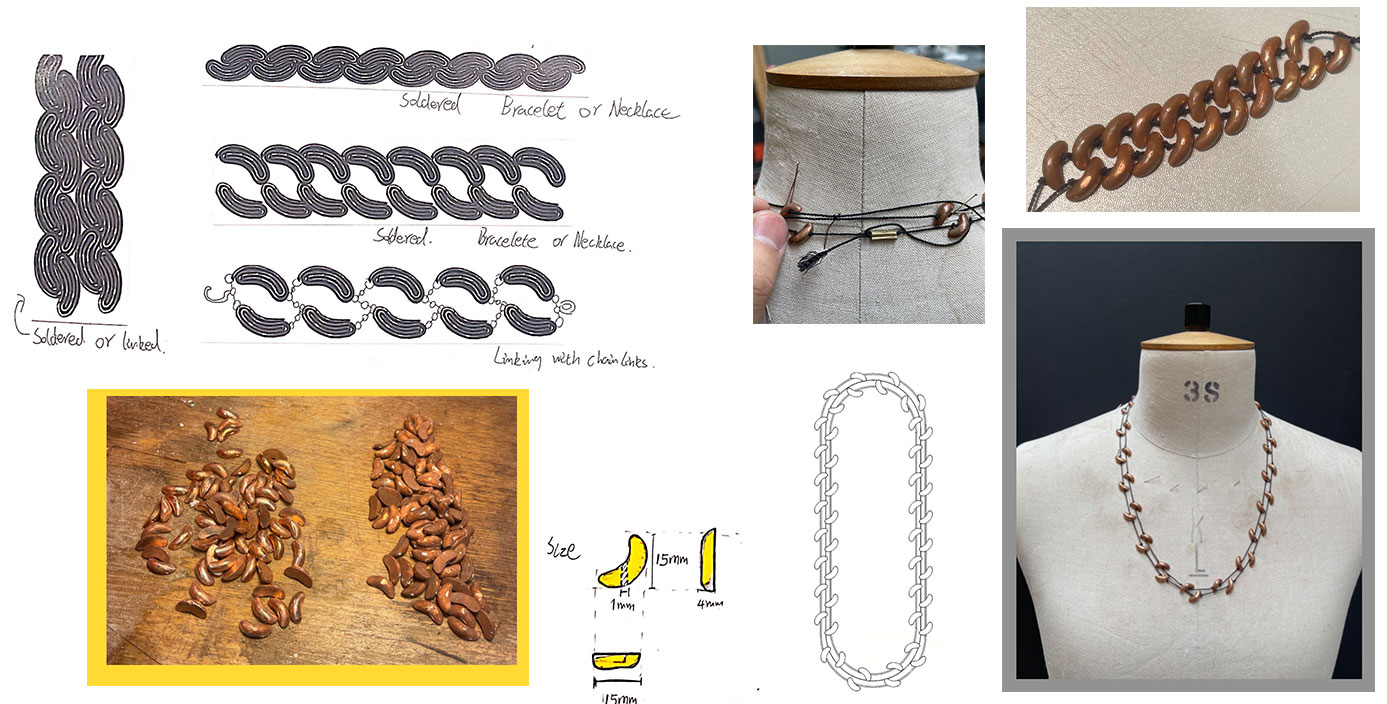
The emphasis of imitating traditional beadwork lies in the threading technique. By arranging the spacing between each imprint, he incorporated a subtle curb chain motif into the form of beading. During wear, the constant flipping of imprints also prompts viewers to contemplate the presence or absence of the curb chain.
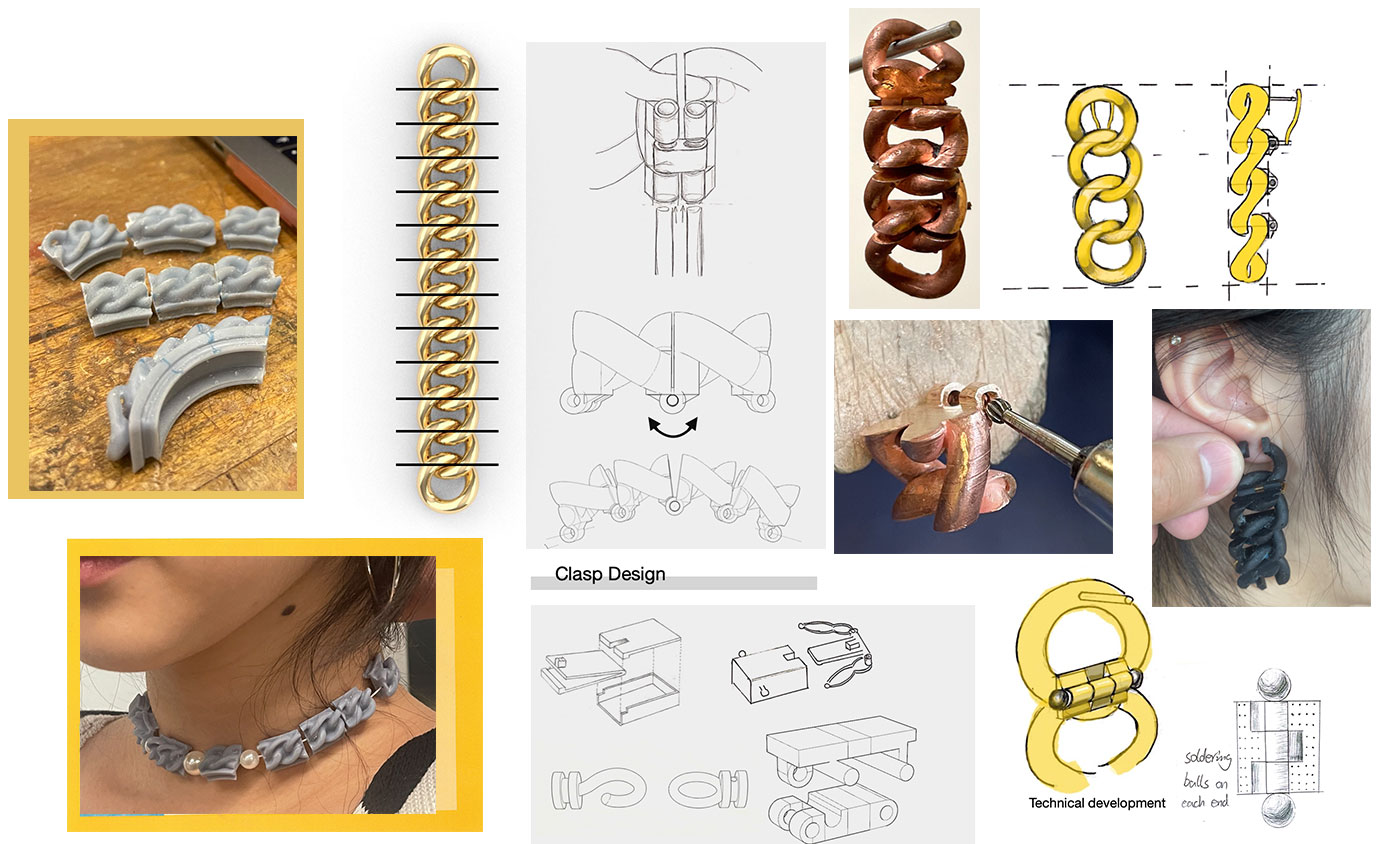
Chains are often regarded as more functional than aesthetic because their unique mode of movement allows them to change shape flexibly. By connecting individual curbs together and adding hinge connections, he has stripped away the practicality of the chain, leaving each curb solely for its aesthetic appeal.
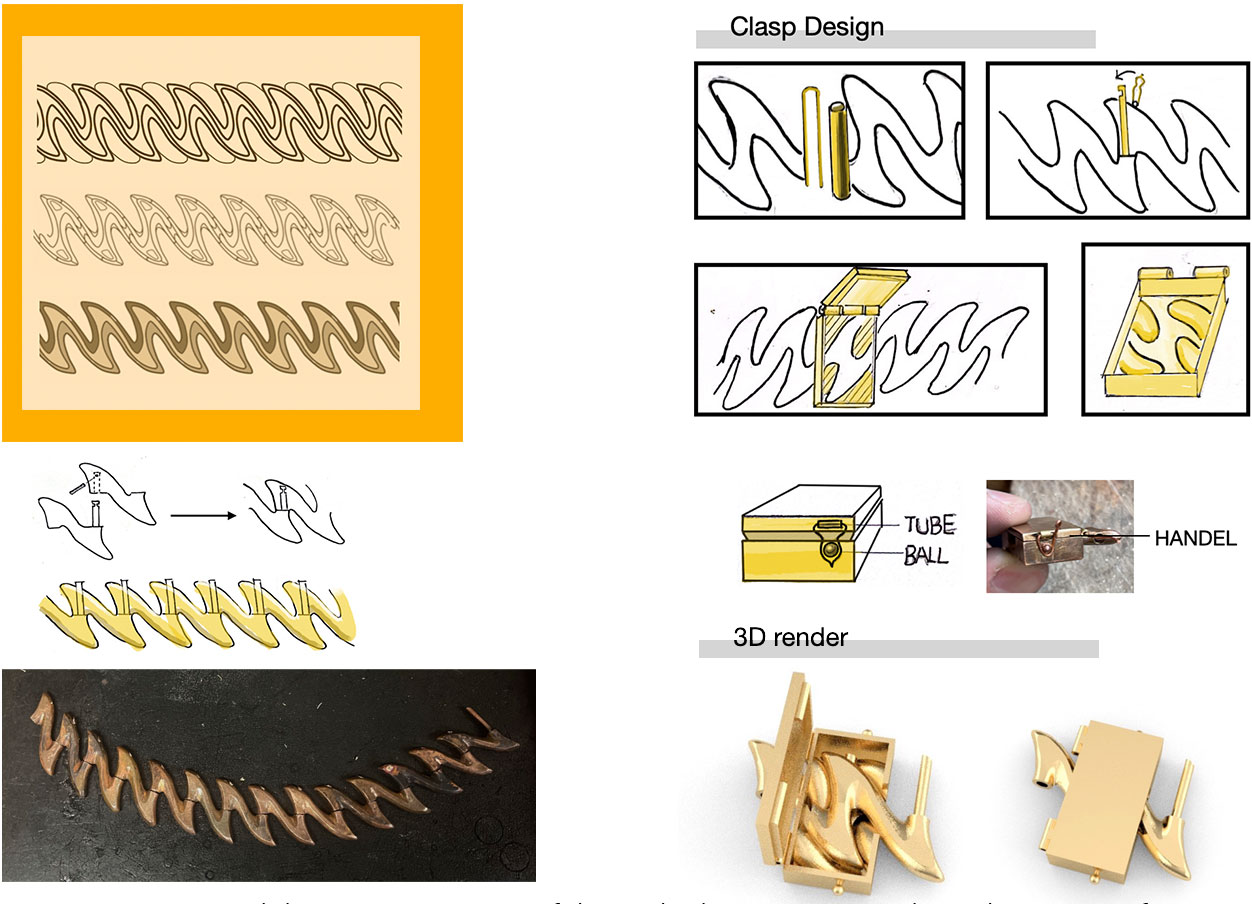
In this piece, he has extracted the negative space of the curb chain to create a bracelet. By transforming solid space into a movable hinge structure jewelry, paired with a clasp featuring the curb chain's positive space, the wearer can experience the sensation of wearing negative space around their wrist.
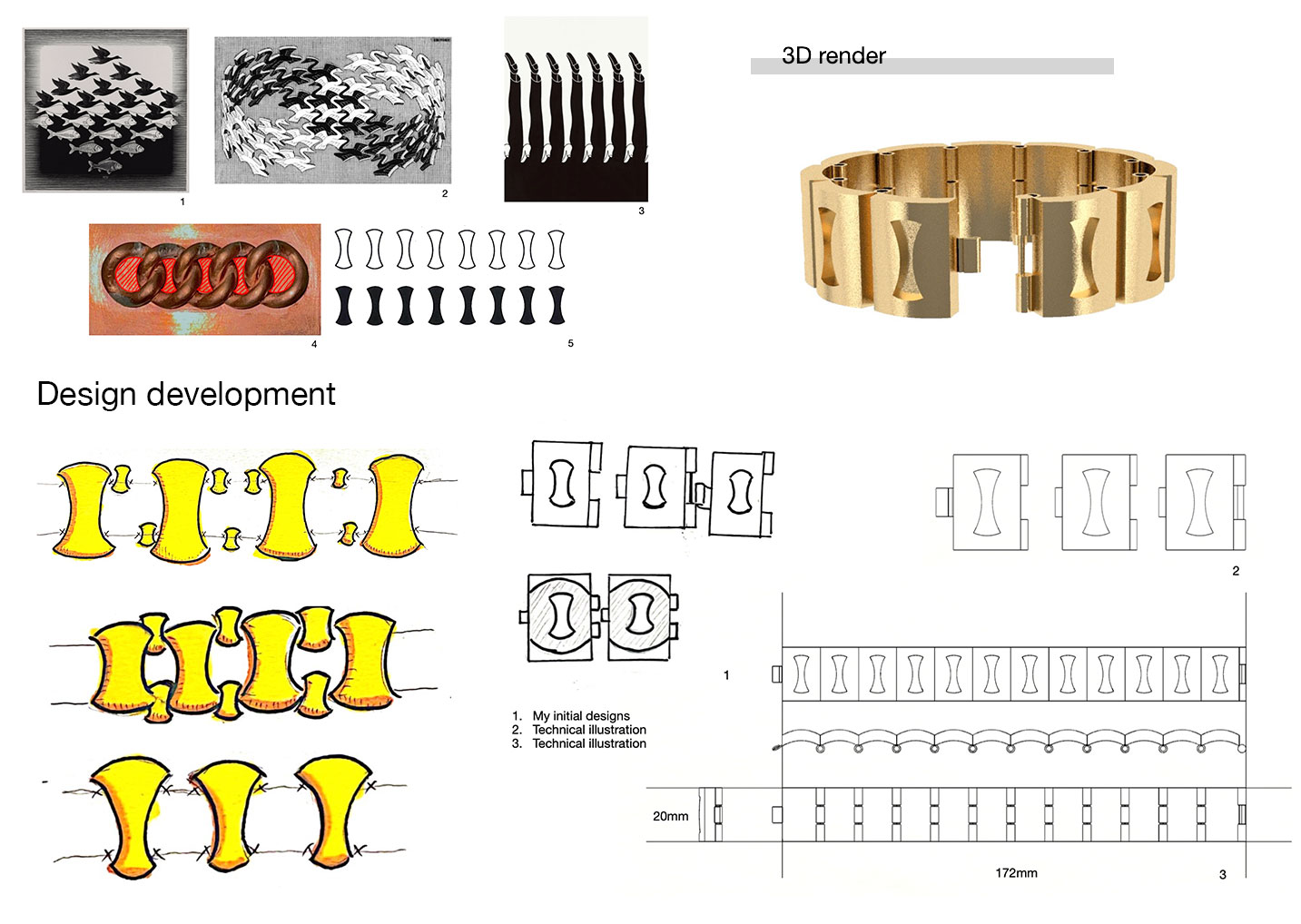
Brooklyn extracted the negative space from the flat view of the curb chain, arranging it into multiple chains of varying sizes and connecting them into one piece. This process symbolizes his conceptualization of the curb chain, transforming it into a design through careful consideration of its quantity.