
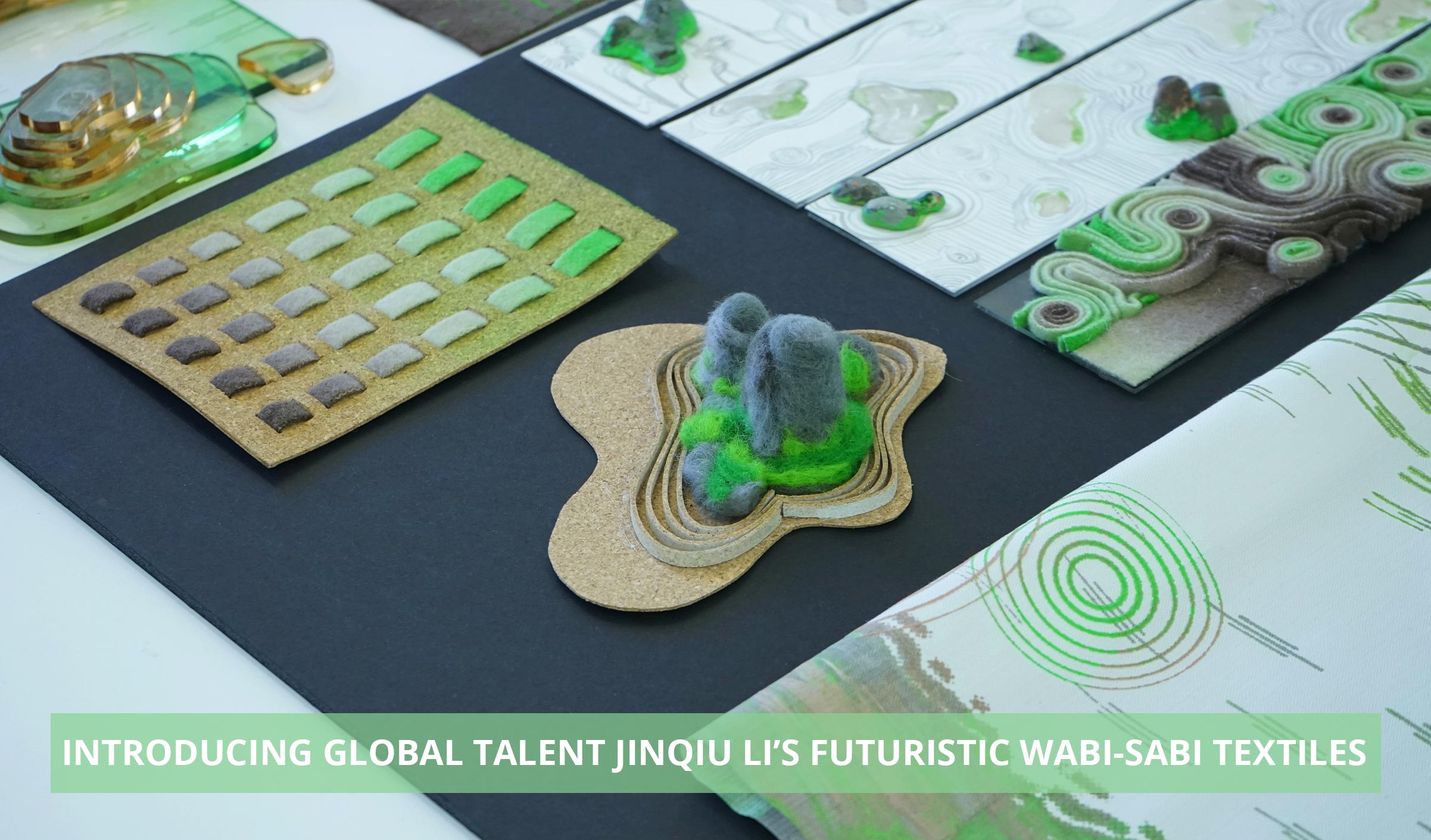
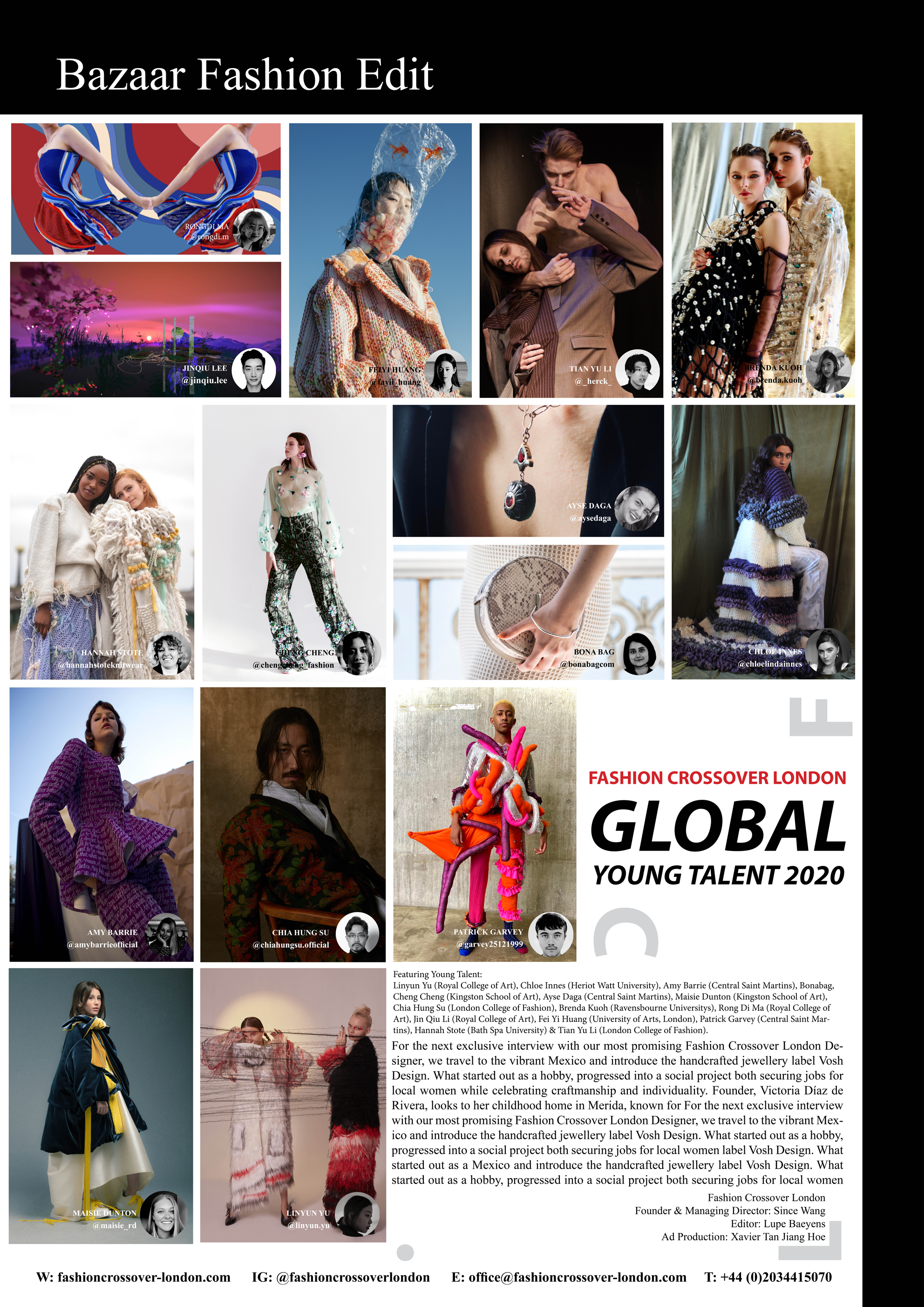
Merging textile with data, it sounds like a fascinating plot to a sci-fi film, but the Chinese textile designer Jinqui Li makes it a reality. The Royal College of Art Designer looks at Asian philosophy and architecture as he develops an innovative way of experiencing textile. Truly breaking them mould and boundaries of the textile industry with his focus on blending craftsmanship with technology, Jin Qui Lin’s most recent work was featured in the September Issue of Harper’s Bazaar UK, we had the pleasure of unravelling the threads of his graduate collection.
I aim to look forward, and see the future of textile materials and the innovative possibilities. The combination of certain materials, that complement each other, allow the initial design of the interior space to become a more farsighted extension, and move into a more free living space. In this application, it has not only been expanded it also promotes the field of textile boundaries, integration of cross-borers and breaths new life and energy in the future of textile.
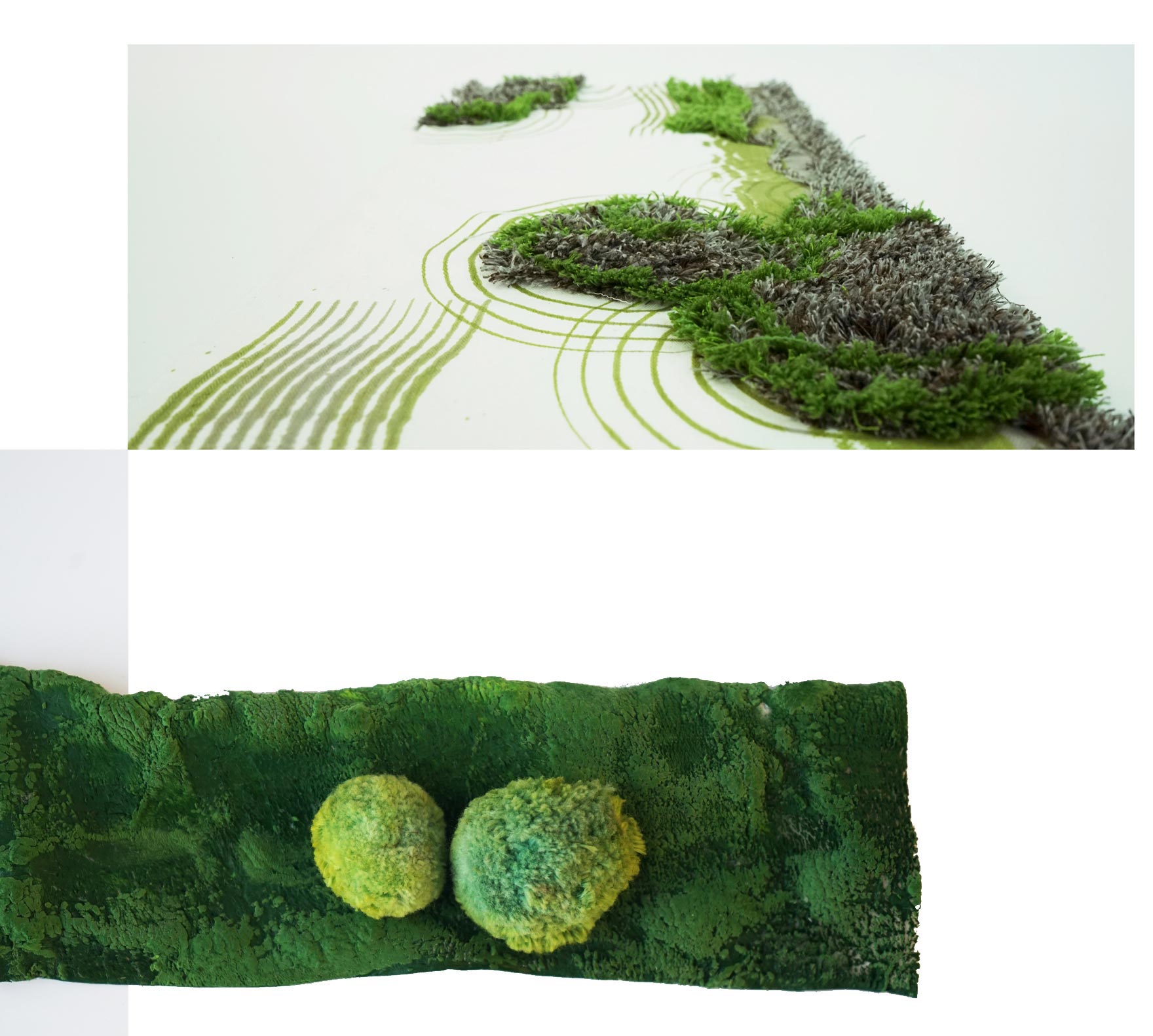
With my work, I wish to appeal to people’s imagination through tactile elements. There are many forms of tactility, including shapes, sizes, textures, temperatures, humidity, softness, sounds, smell and many more. When people are visual obscured, other senses become more sensitive, and try to fill in the visual weakness or voids. I hope to create a Zen realm that demonstrates and understand of wabi-sabi, and virtual creations that need to anchored a physical basecamp, rather than existing in solitary. Designers should rethink the true spatial radius of VR, the richer the fantasy is, the stronger the attachment to reality of it.
"I hope to create a Zen realm that demonstrates and understand of wabi-sabi, and virtual creations that need to anchored a physical basecamp, rather than existing in solitary"
I believe that textile and fashion cannot be separate from each other, they are actually one. Textile is a tool used to demonstrate the context of fashion, and is inherent to the fashion industry.
I try to use hand-crafted textile design techniques and combine these with new technological devices to complete a transformation of traditional handicraft into media art. As a textile designer, my goal is to bread the traditional perception of the textile design industry by scanning and remodelling a range of computer technologies and in doing so regenerate a piece of hand-made fabric in the form of data. I believe this projects also carries both a scientific and education function. The work itself showcases a feasible integration and innovation between textiles and technology. My entire work also exists as an online gallery, to be explored and enjoyed by people at hone, the can have a wonderful experience of visiting the Fabric Museum and experience it, just as if it were real.
"My entire work also exists as an online gallery, to be explored and enjoyed by people at hone, the can have a wonderful experience of visiting the Fabric Museum and experience it, just as if it were real."
See Jinqiu Li's full collection

Words by Lupe Baeyens