
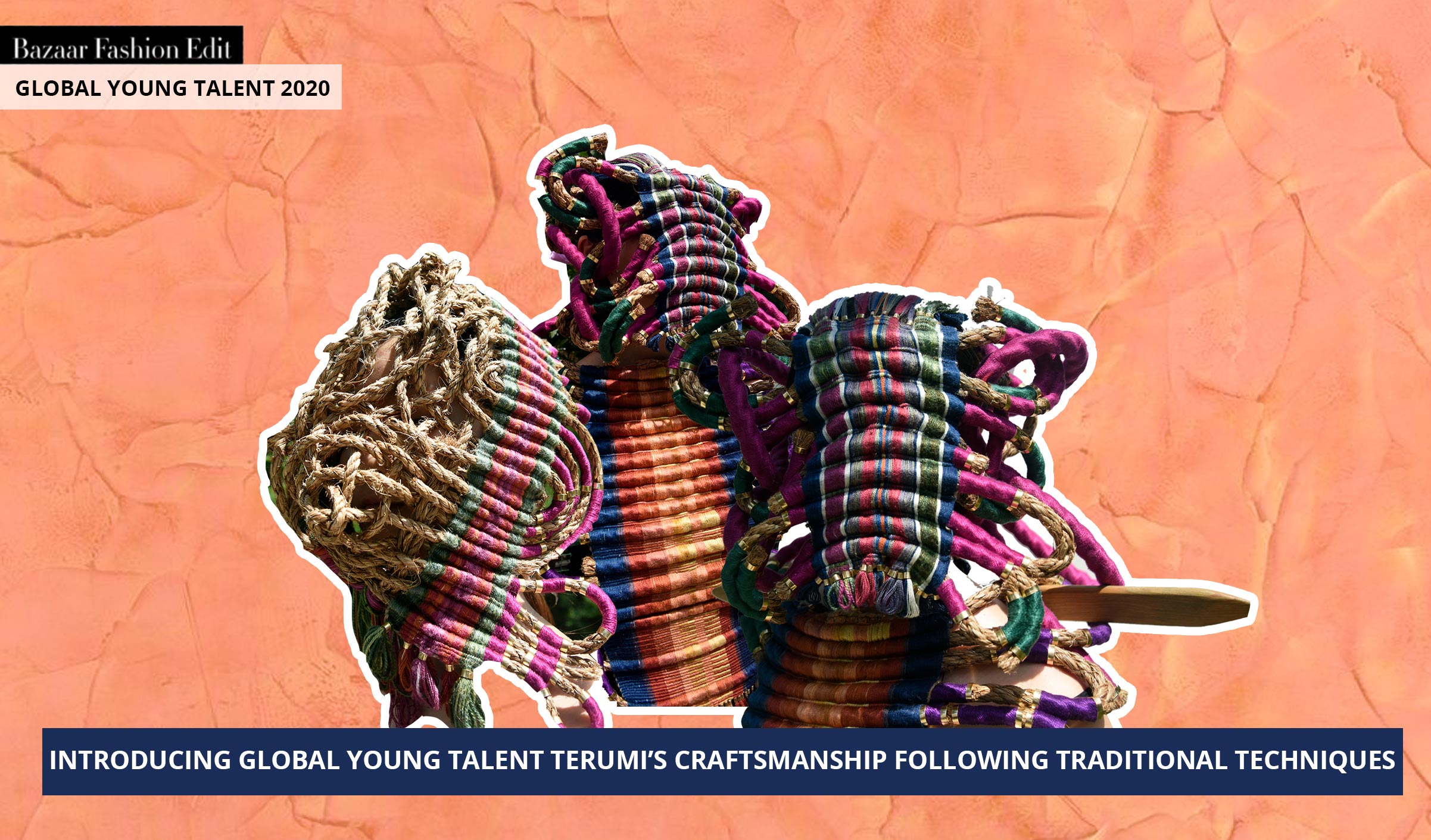

With the help of Parsons alumna Terumi Saito traditional textile techniques rise from the ashes of extinction in her ‘Birds Diety’ mixed media sculpture. Swapping out the busy New York lifestyle, for a slower pace, the textile designer moved to Peru and Guatemala to learn ancient looming and weaving skills from local masters. Advocating for a green, inclusive and cultural sustainable future her collection has been featured in the November issue of Harper’s Bazaar UK and we’re sure this is just the start.
.jpg)
The objective of my practice is to raise interest and build awareness of cultural sustainability. In 2019 and 2020 I had the opportunity to learn traditional weaving and natural dyeing techniques from local masters in Peru and Guatemala. I combined the rudimental weaving technique of back-strap weaving with a wrapping technique called Coilling, inspired by baskets made by Native Americans. By combining these different techniques from different cultures, I am proposing a contemporary hybrid craft that both preserves as well as honours these skills. I genuinely believe in the power of hand-making and slow-making. I bring stories and people together through my practice and personal experiences while highlighting the value of cultural sustainability.

In 2019 I applied for a residency programme in Peru to enhance my skills, here I learnt the Andean backstrap weaving technique from a local master teacher. I fell in love with this technique, and it gave a special connection with the loom, as it is so different from any other form of weaving. Building further on traditional textiles I got into contact with a local master in Guatemala, and received a research funding award from Parsons earlier this year. The local masters taught me traditional weaving and looming techniques, I cherish the many precious moments I had both living with and learning from them.
"The local masters taught me traditional weaving and looming techniques, I cherish the many precious moments I had both living with and learning from them."
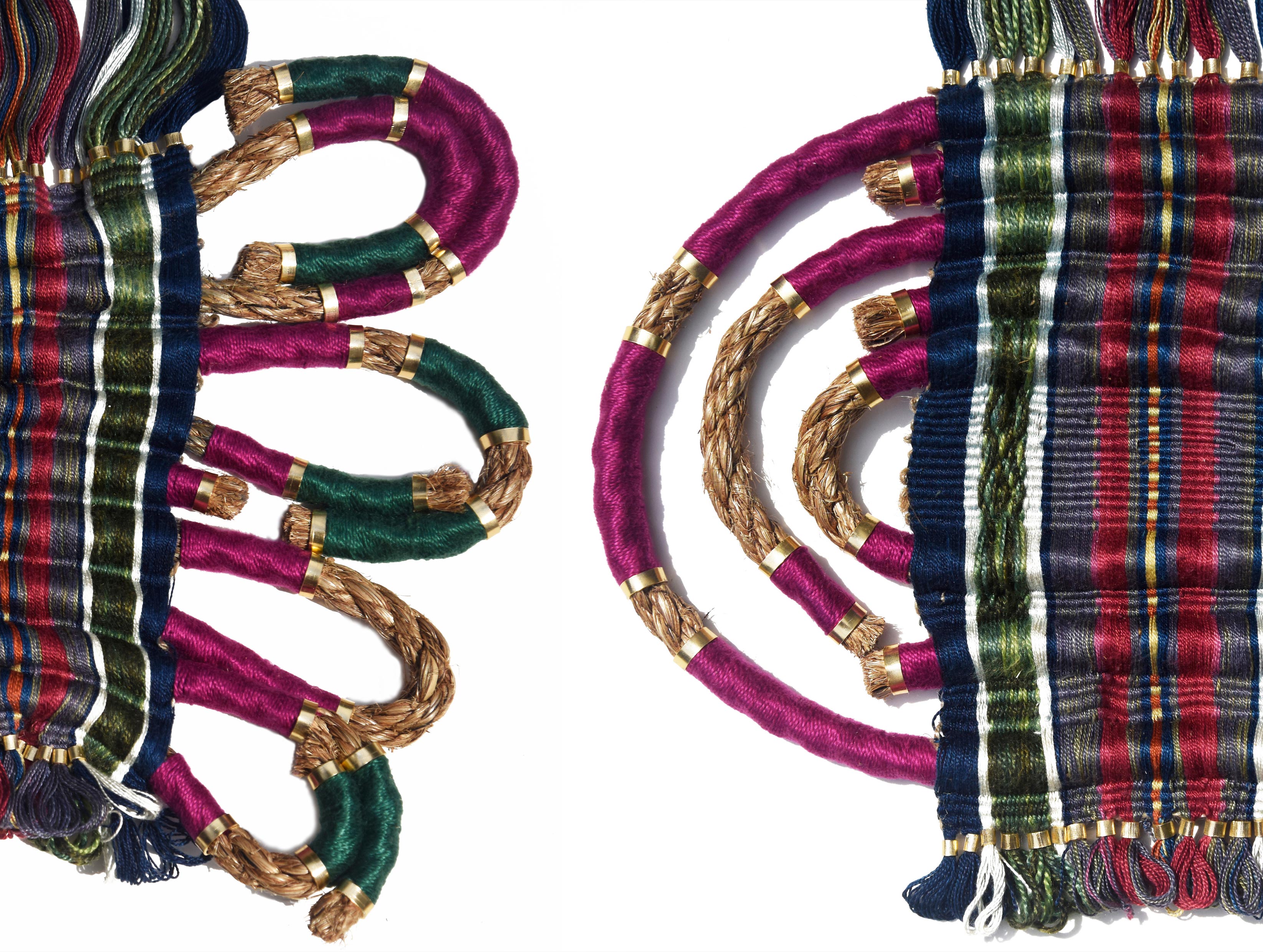
"BIRDS DEITY" is a collective of woven art which is activated and transformed into wearable art. It is inspired by a story of the sacred birds such as the phoenix and the peacock. Phoenix stands symbol for "rebirth" and "courage," as well known for the famous quote "Rise like a phoenix from the ashes.” The peacock was believed to have an ability to eat poisons such as fear and suffering and ease negative energy, which symbolises "acceptance" and "compassion." I seek inner peace with my creations and convey a message related to Spirit and Life. These birds form a fitting metaphor for my quest to revive and honour the dying art of traditional textile techniques. On the other hand, it was an apt reflection of my state of mind during the challenging time, after school closed, and the city lockdown happened.
I learnt that it’s never too late to start a new chapter of your life. I came to the MFA Textiles programme without any textile or fashion background. In the beginning, I used to feel anxious about my lack of knowledge and skills. There was a moment I was uncertain about my role as a textile maker. That motivated me to apply for the artist in residence program in Peru, and to go on a research trip to Guatemala later. I am glad I went on a journey and discovered something I felt very passionate about. “Where there’s a will, there’s a way!”
"I cam to the MFA Textiles programme without any textile or fashion background. In the beginning, I used to feel anxious about my lack of knowledge and skills. There was a moment I was uncertain about my role as a textile maker."
Discover Terumi Saito's full collection
Words by Lupe Baeyens