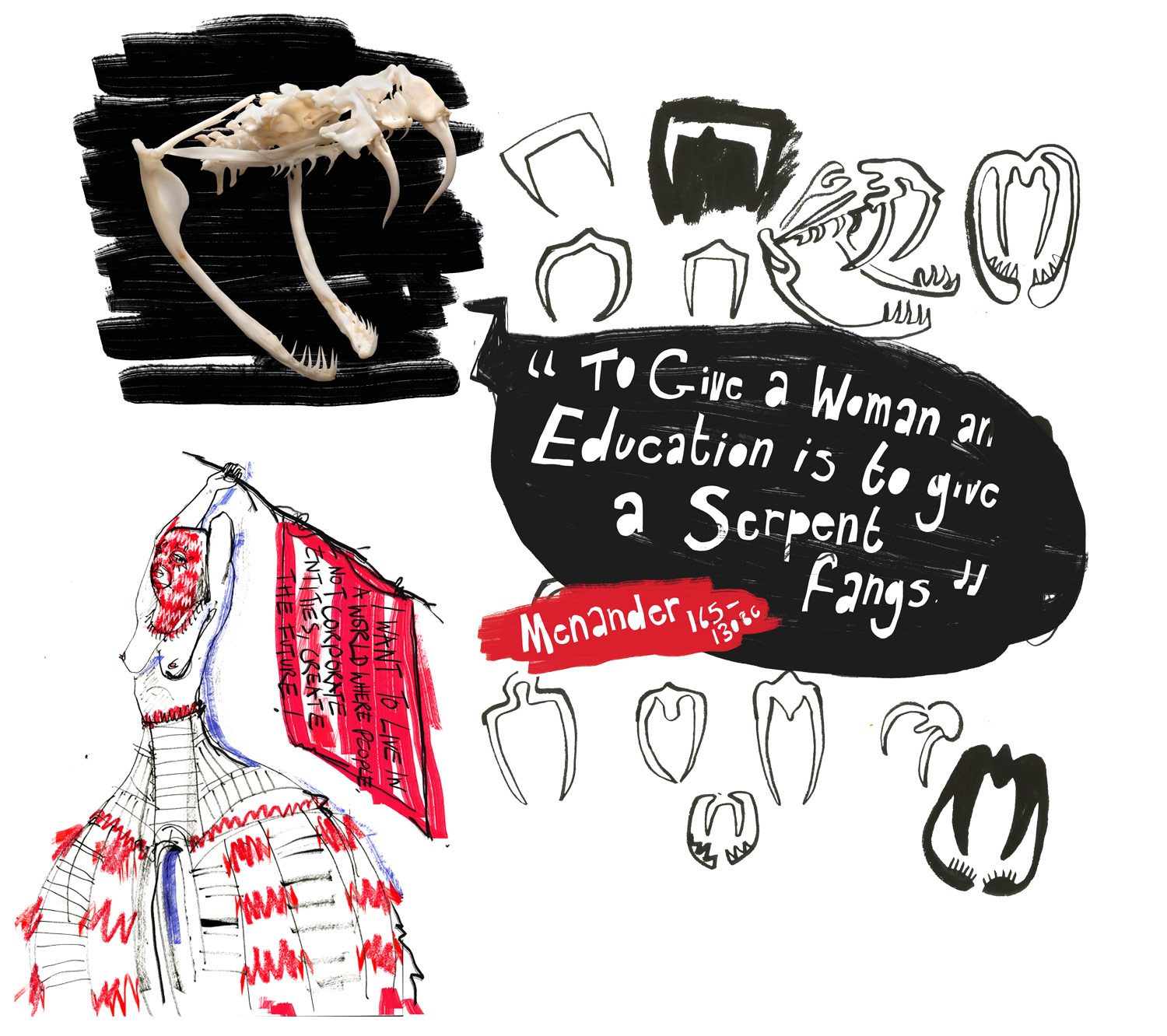
Maddie’s graduate collection was heavily inspired by the Wilder Mann documentary by Charles Freger. It is about how the transformation of man to beast is a central aspect of traditional pagan rituals that are centuries old, which celebrate the seasonal cycle, fertility, life and death.
Each year throughout Europe, from Scotland to Bulgaria, from Finland to Italy, from Portugal to Greece, Switzerland and Germany, people literally put themselves into the skin of the ‘savage’, in a masquerades that stretch back centuries.
By becoming a bear, a goat, a wild boar, a devil or a monster with jaws of steel, these people celebrate the cycle of life and of the seasons. Their costumes are made from animal skins or plans and decorated with bones, encircled with bells and capped with horns or antlers. Each individual piece is filled with extraordinary diversity and prodigious beauty.


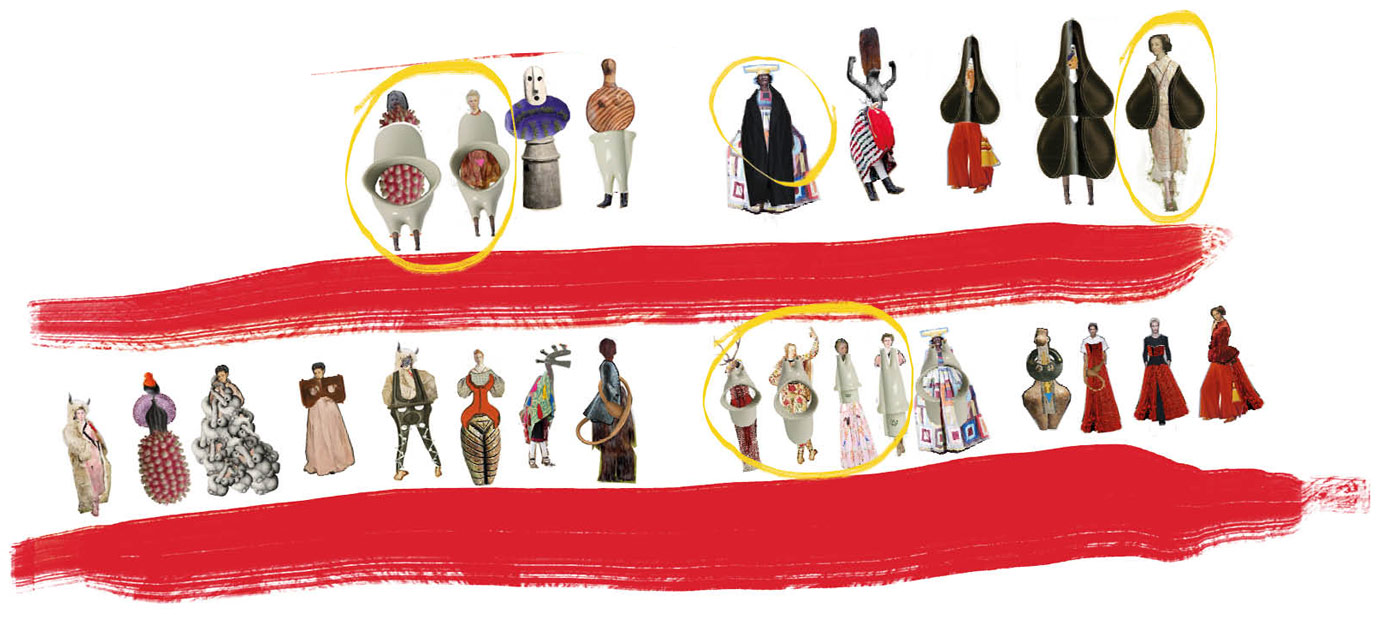
Maddie’s design process began with her created collages by cutting up elements of her research and combining them in new, diverse ways, which allowed her to generate innovative and bold silhouette ideas.
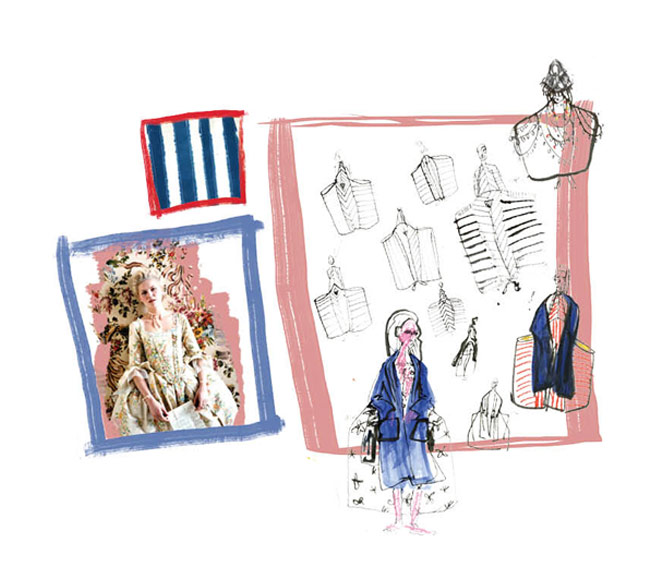
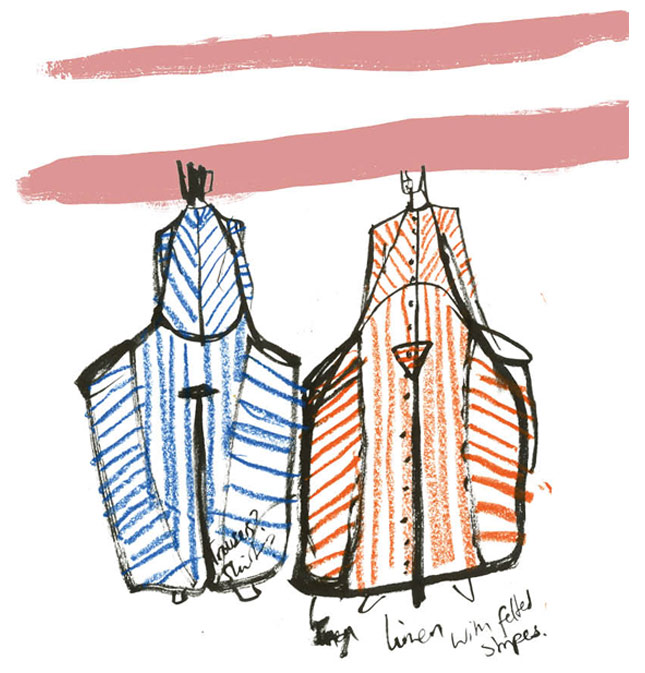
She then began to explore the cut of 18th century dress, both the exaggerated wide-hipped silhouettes of the upper classes, and the simpler a-line tunics of the factory workers. By playing around with the idea of combining the decadent wide-hipped silhouette with simpler striped, linen fabrics, Maddie was able to create modern jumpsuits.
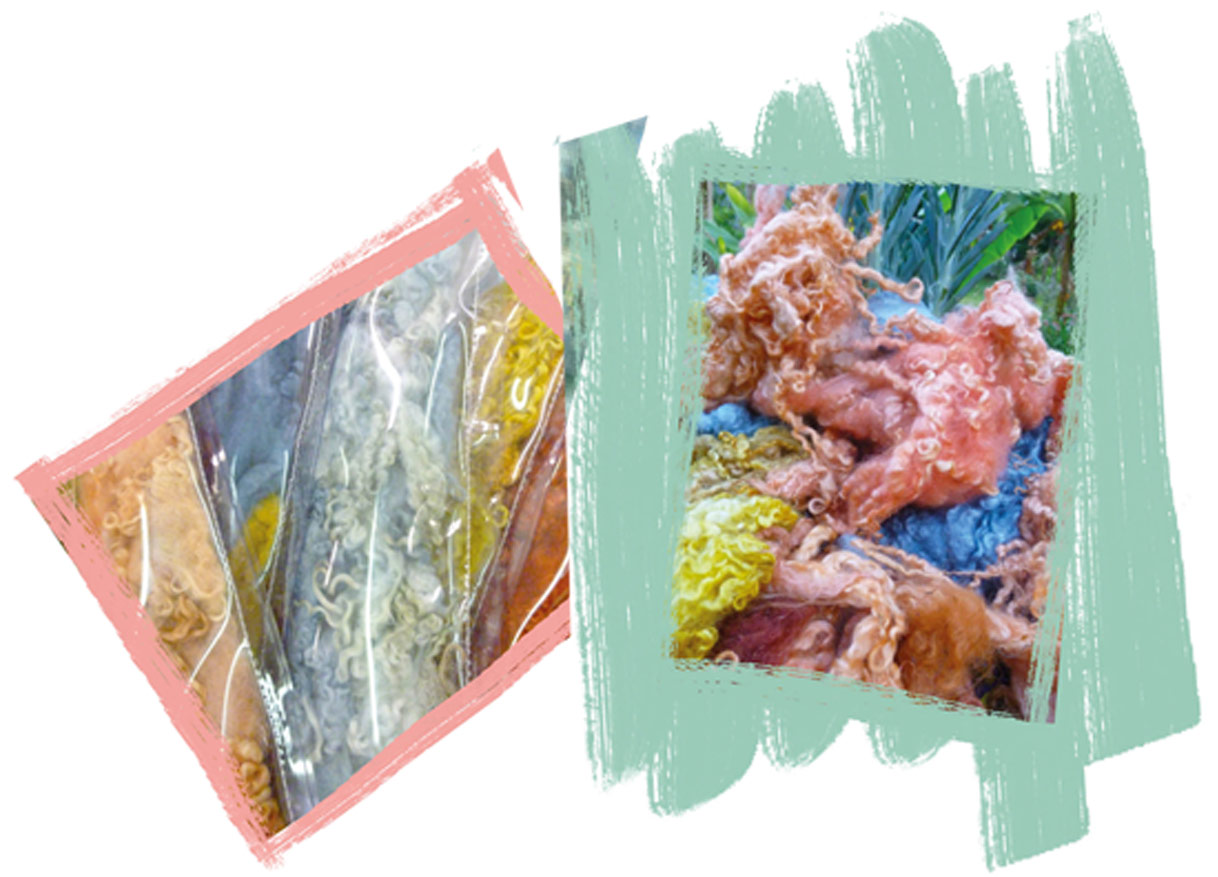
Maddie used wool for her collection as she fell in love with the texture, smell and versatility. She believes that it is a viable textile that can be used to make the fashion industry more sustainable as it biodegrades and is both durable and renewable.
She sourced her own wool from a British rare breed sheep farm in Rugby. Maddie procured Teeswater, Masham and Hardwick fleeces due to the appealing, curly textures and colours. She spent time hand-washing each fleece and drying them in the sun, in preparation for her next stage of production - plant dyeing.
Plant dyeing is a technique that is both changeable and unpredictable as it relies on numerous factors, such as the mordant, the type of metal pot you work in, the plant matter, the time of year, the type of water, etc. For example, you could get one colour with a plant one week and then the following week receive a completely different result even though you are using the same material due to environmental changes and timing. Maddie used this alum mordant to dye her fleeces a range of different colours. Following this, Maddie then encapsulated her wool in transparent plastic that was from waste sent to her by a Welsh Yurt maker’s window offcuts.
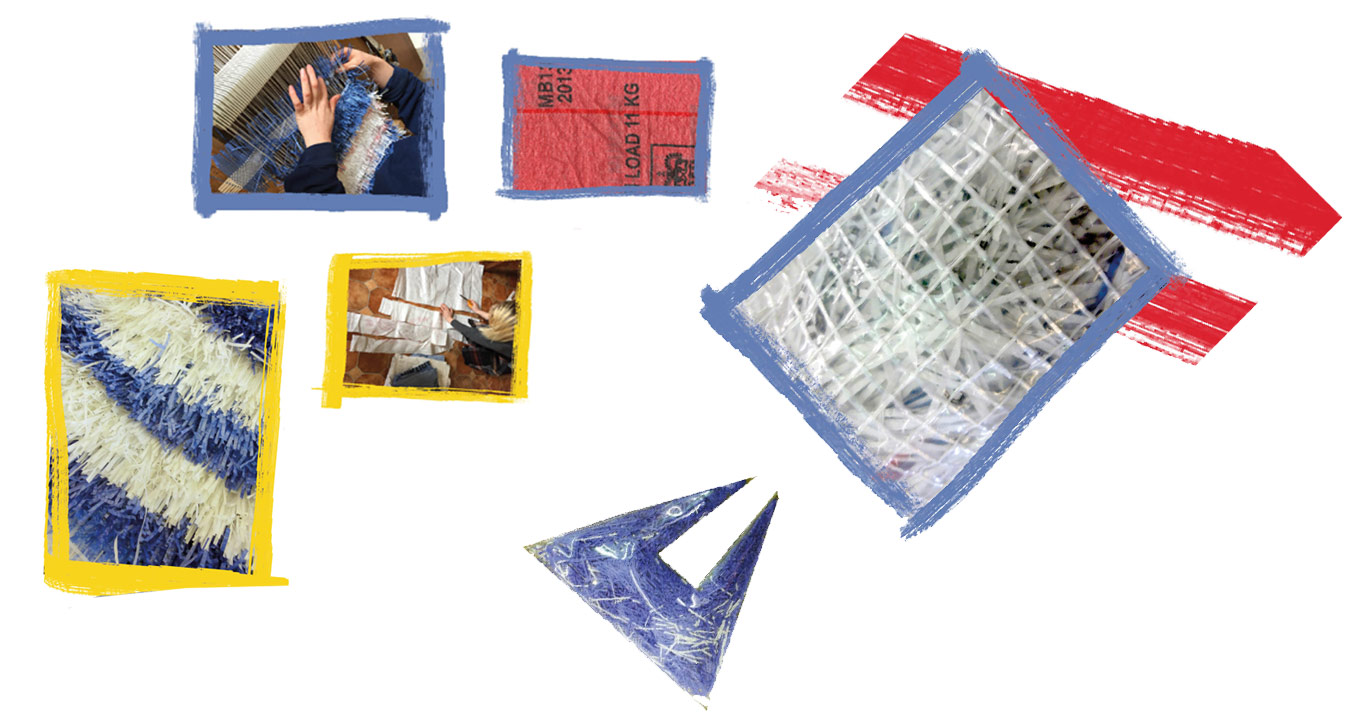
Maddie used a loom to transform the waste plastics and other materials into brand new textiles. According to her, the most successful was the fluff/faux fur type textile that she created using Royal Mail and garden waste sacks. She cut the sacks into strips and then shredded them at either side to leave a frayed edge. These strips were then woven through the loom to create a build up of texture that made her textiles.
Overall Maddie’s collection is about the celebration of the female body and exaggerating its features. She drew inspiration from ancient fertility figures from across the world, which came in a variety of shapes, colours and sizes; like the woman they represent.
Diversity is at the heart of her collection, drawing upon global culture and seeking inspiration from real, strong and powerful women and creating garments that are intended to empower the wearer through their own unique femininity and rebelling against the societal norms of a white elitist, patriarchal, heteronormative capitalist society.