
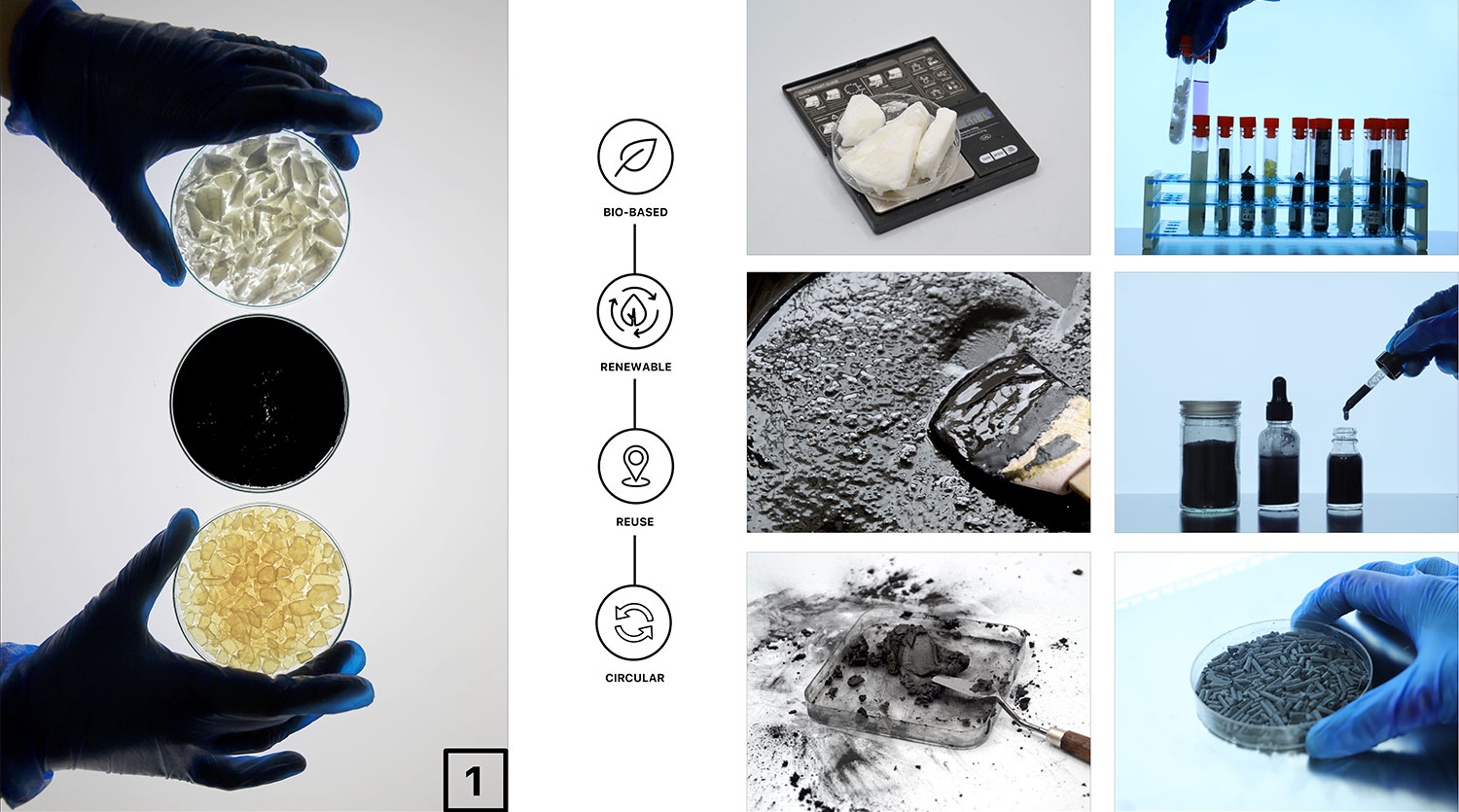
Made from carbonaceous shells, activated carbon is a powder material which is known for its natural filtration properties due to its microporosity. It is a renewable resource which can be involved within a circular economy system by upcycling non-edible food waste. The goal of this research was to bind it with local and natural binders such as tree resin and plant-based wax, without disturbing its filtration properties, in order to bioremediate air pollution with it.
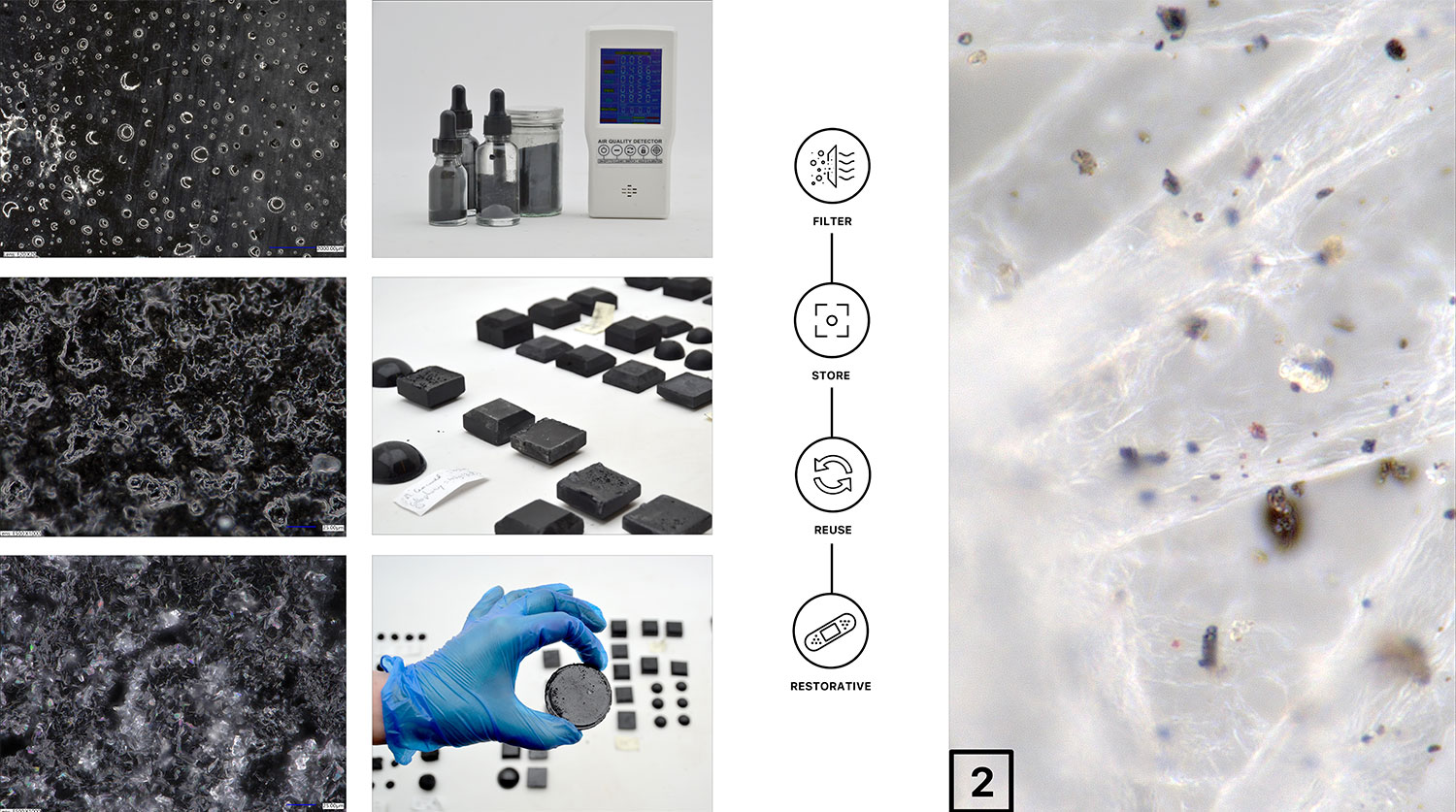
The project relies on technology and organic chemistry. At the nanoscale, activated carbon is capable of capturing and storing air pollutants through a phenomenon called physical adsorption. Given that pollutants particles measure between 2 and 10 μm, they are therefore invisible to human eyes. To work with the invisible and to validate the material, microscopic views were the subject of an initial observation to determine the material microporosity. However, for a more accurate understanding, it has been necessary to conduct air analysis through technological sensing devices. The selected mix combines the best filtration and graphic properties. After the bioremediation process, it is reusable as pastels that rehabilitate air pollution as a new type of pigment.
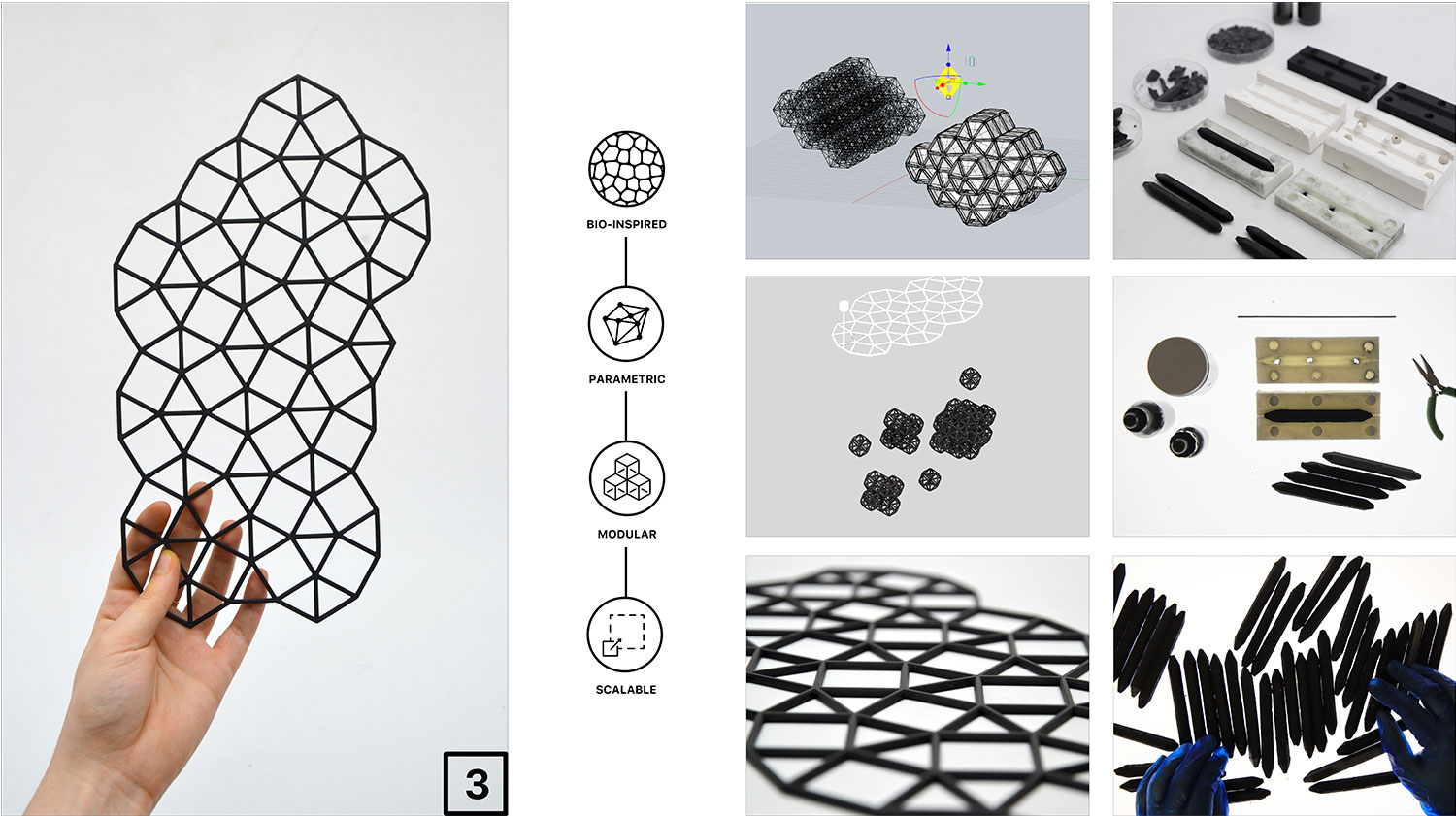
To shape the design, Marie worked on parametric design to propose a lattice structure specifically dedicated to London Underground stations. In that sense, the structure is modular and scalable according to how much the surrounding environment is polluted. The pattern composition is bio-inspired by the carbon microporosity in order to encourage the filtration process. On the other hand, the structure body is designed with a cloudy shape to rise people awareness through a visible state of pollution. The different pastels have been mould-casted and assembled through a threading technique with a linen thread. Moreover, the material is also 3D-printable.
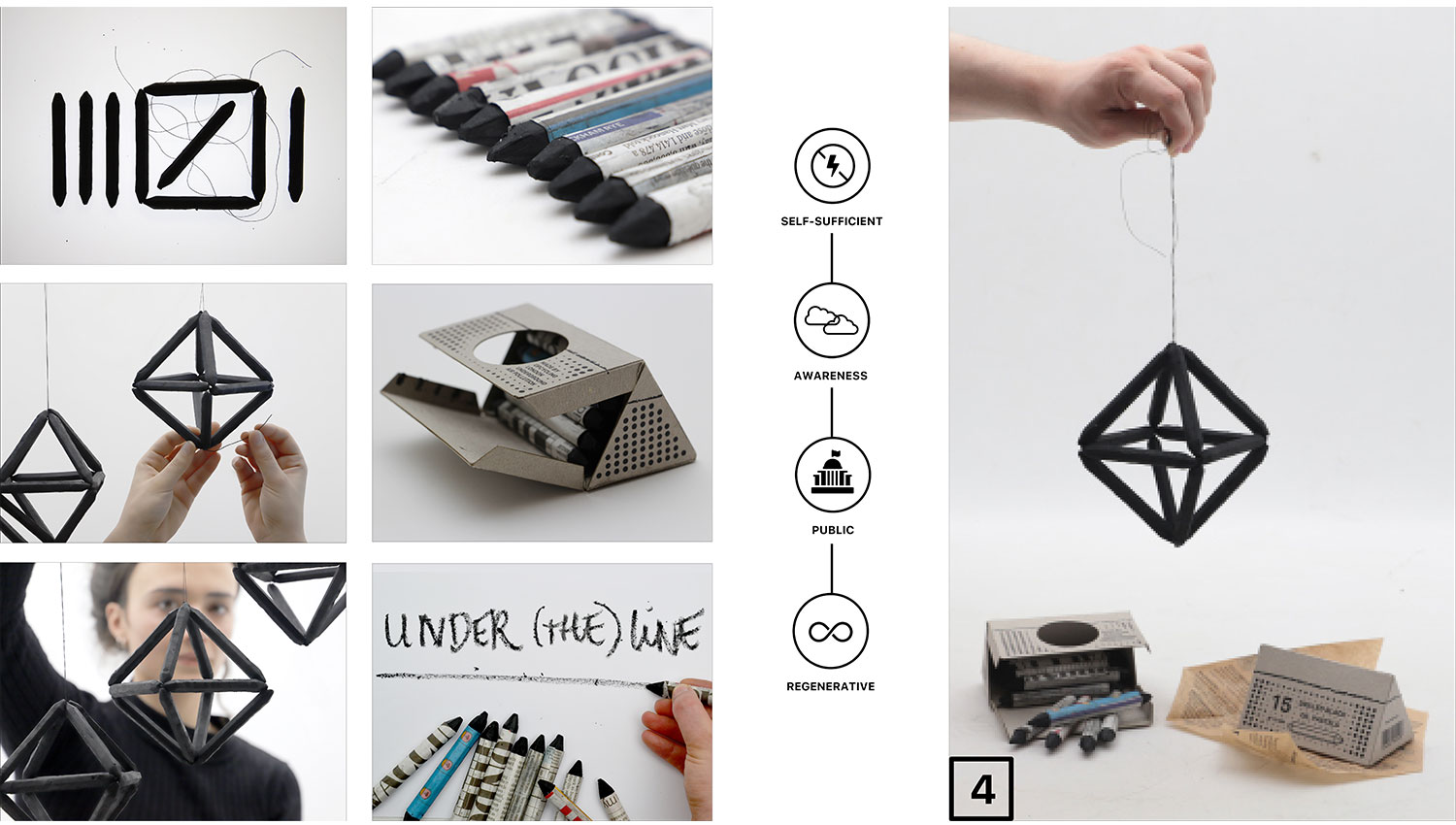
After being suspended for two months in Underground stations, the structures are ready to be deconstructed and sold as pastels. To brand the concept and to keep a circular economy system, the packaging is made from recycled metro newspapers. The consumers will also find an instruction booklet to inform them on the concept, the pastels composition and the recommended use.