Michelle Lung’s collection draws upon the untouchability of digital culture we are undoubtedly surrounded by and arguably depend on everyday. Nowadays, it may be argued technology is one of our most valued possessions; if there was a fire, most people would reach for their smartphones and laptops before the contents of their jewellery box. The majority of people hold a mobile or are plugged into earphones closer to their body more than jewellery does. So are these now becoming arguably more personal, precious and considered artefacts to adorn the body than jewellery is?

Yet, these products are just vessels for the true things held within them that makes us value them so. It is the personal archives of data, information, memories and part of us stored within, that could be all wiped away with a press of a button as it never existed. Michelle was fascinated by the crossover of value typically associated with jewellery and the value we now hold with our technologies and wanted to explore the questionable shift of mentality surrounding value and possessions.

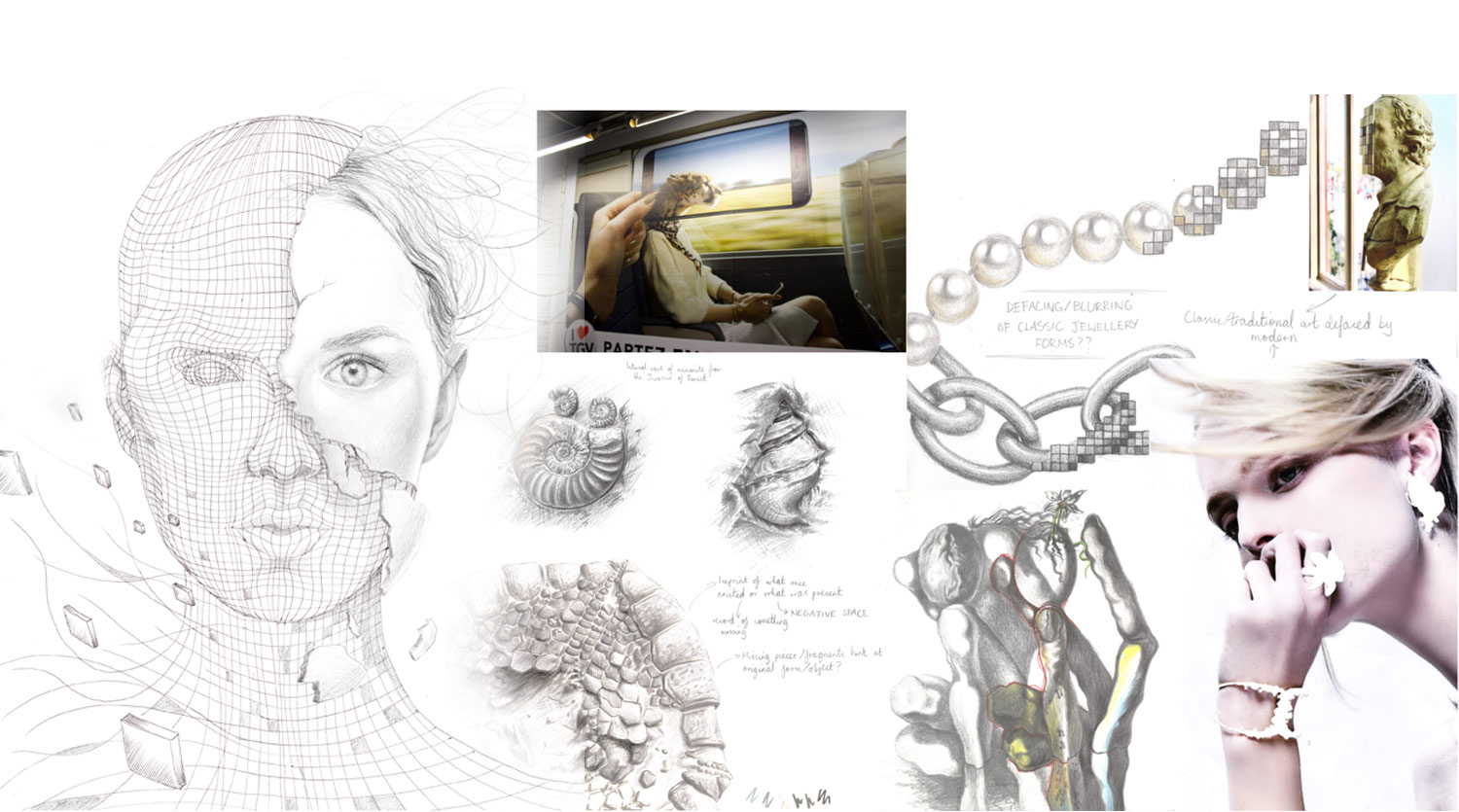
Taking inspiration from the likes of cubism, surrealism and digital aesthetics, Michelle tried to represent the fragmented nature of the digital sphere through using technological means of production like 3D printing, laser cutting and particularly CAD design as a tool to create a technique and design that otherwise could not be achieved just by hand. She was fascinated with the idea of the ‘nothingness’ and void space of the digital realm, how we rely so much on these technologies yet can’t really physically touch them, in the sense that it’s all data floating in an undefined space.
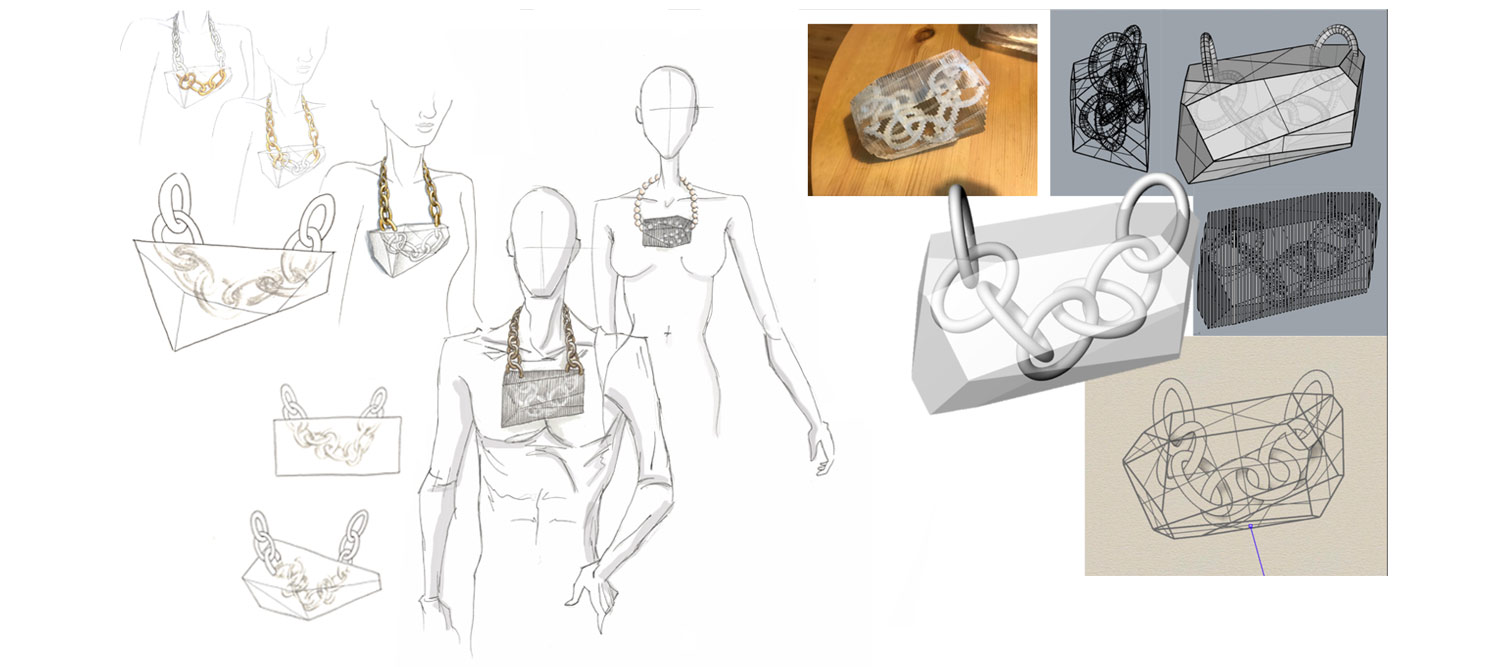
The designs all reference typical jewellery forms from chain links to pearls that we recognise instantly, yet they have been suspended and almost fossilised in these transparent blocks of plastic like the essence of jewellery is captured without the need for the pactual physical precious material of jewellery.
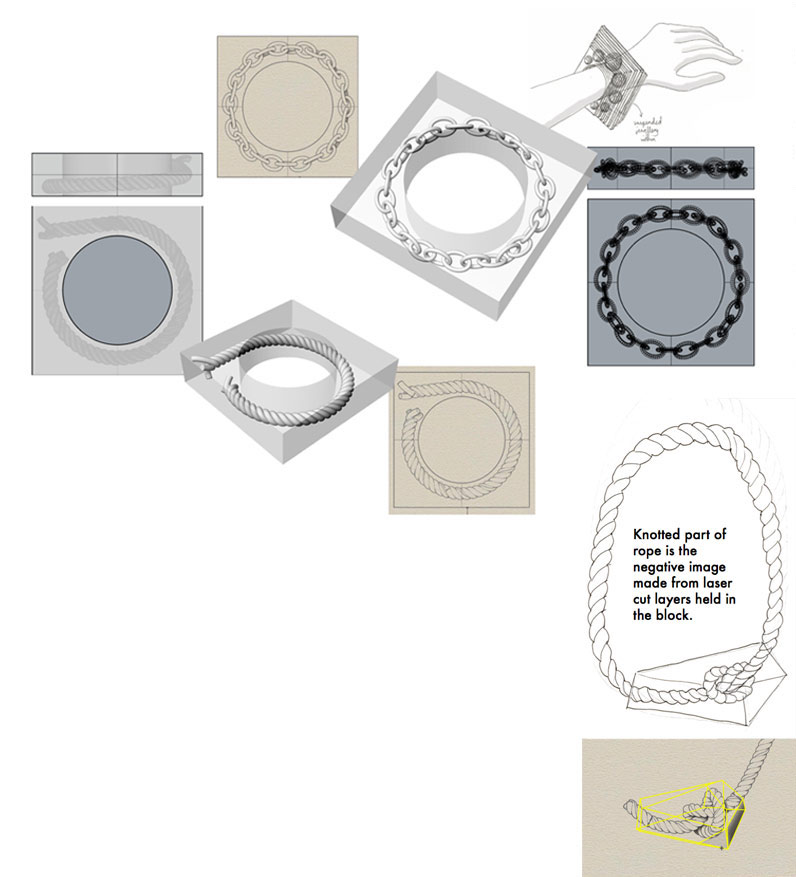
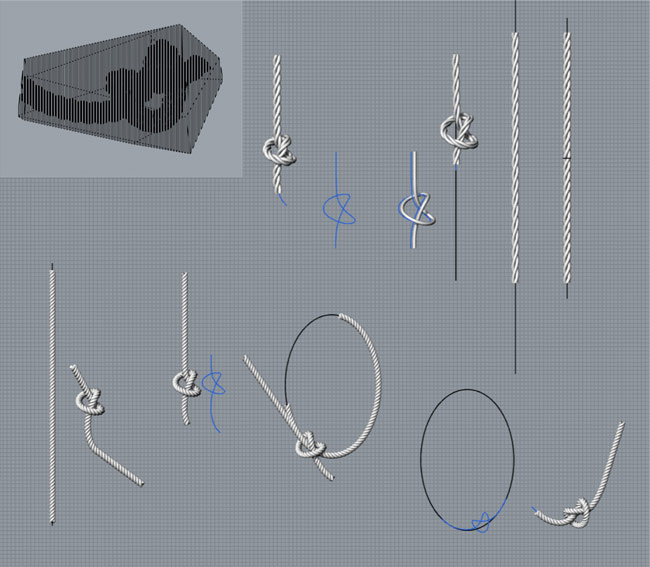
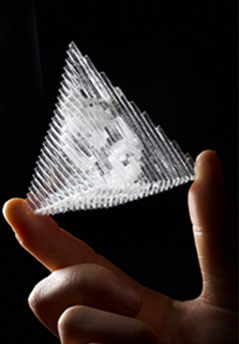
Through numerous experiments and tests in acrylic she developed a technique that used negative space to create almost a holographic effect and combined materials to represent the dip between reality and digital space. The technique itself involves drawing an image in CAD to work out how each individual layer of acrylic will then be laser cut. Then the individual layers are then reassembled by hand to comprise the false image suspended within the clear block.