
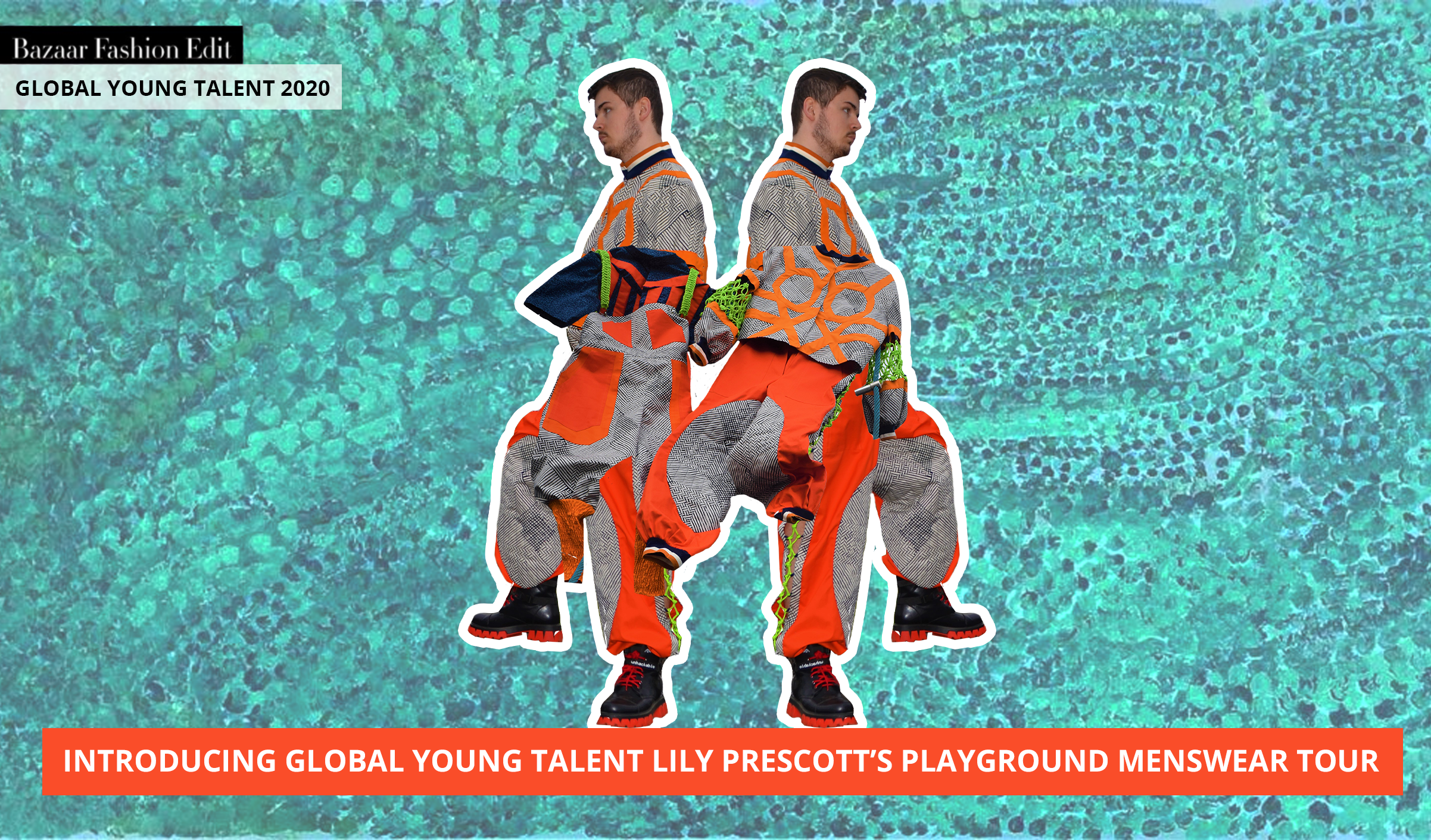

From the gangs of New York in the 19th century to the Everest expeditions of the 20ths, there was no menswear design aesthetic Lily Prescott left unexplored. The Winchester School of Art alumna melds together the traditional and fetishized, creating garments with a new perspective on how masculinity is represented within fashion. Her design have most recently been featured in the October issue of Harper’s Bazaar UK as part of our Global Young Talent, read on to discover how 20th century baseball and American football uniforms, Japanese kinbaku binding and traditional craft techniques are consolidated in a strong menswear collection.
.jpg)
It encompasses early 20th century baseball and American football uniforms, Japanese Kinbaku binding and traditional craft techniques. Observing vintage sportswear informed my silhouette choices through the use of padded applique’s, lace up jumpsuits and oversized shoulder pads. The fetish practice of Japanese Kinbaku binding and traditional craft techniques created an intriguing juxtaposition as macramé and applique focused on Kinbaku’s more artistic elements, bringing a modern yet lewd essence to traditional craft. Macramé made from neon paracord elevates the collection, contrasting successfully with her bold oranges and navy prints, bringing my work into the future streetwear market.
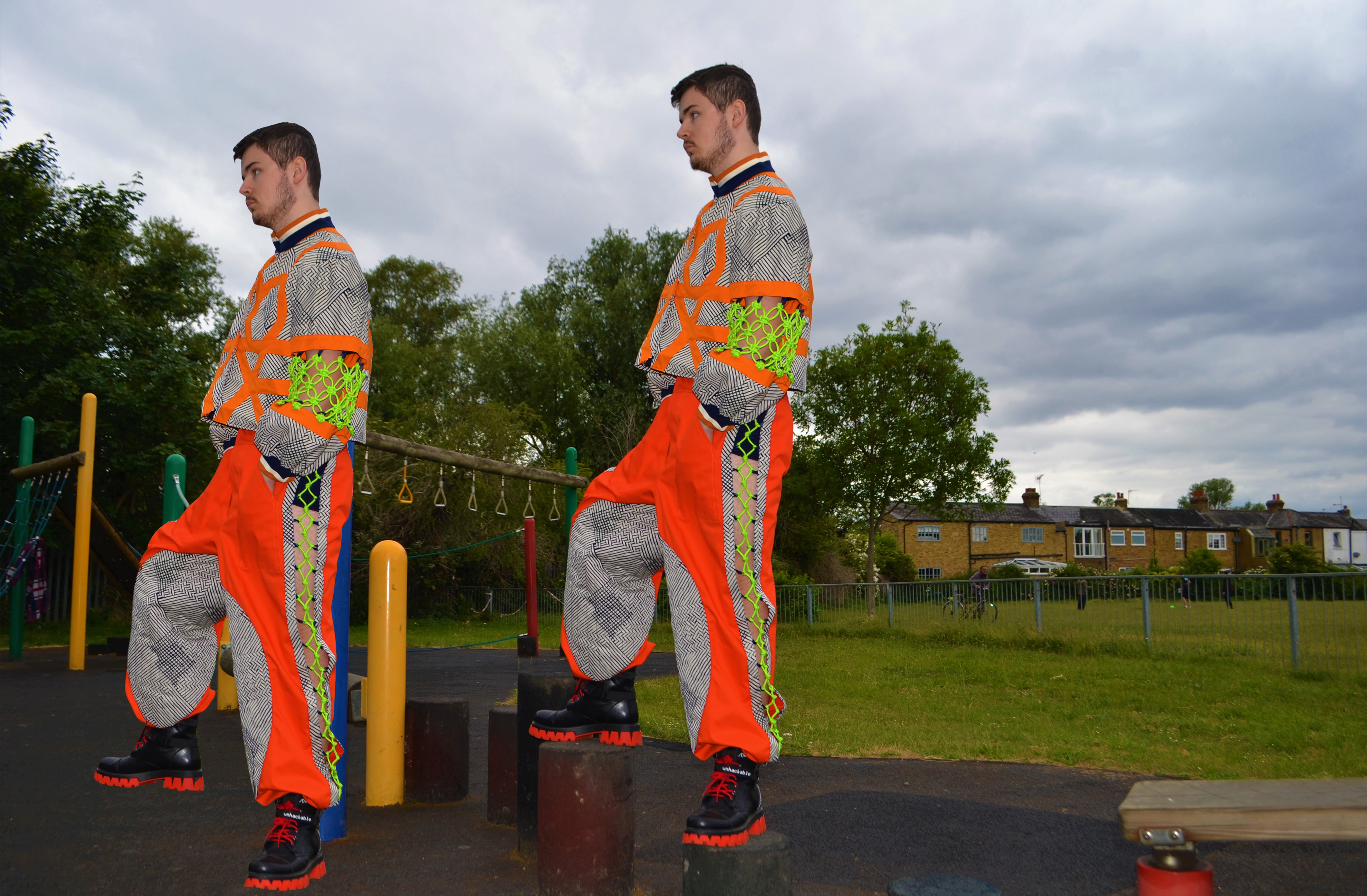
Research is a key factor of my design process as it builds strong foundations for my collections to evolve in every area, from silhouette to textile manipulation techniques and generating my own textile prints. When it comes to colour and textile compositions, I experiment by placing colour roughly onto the design drawings to determine the best outcomes. This part of my process is crucial for my designs as the colour’s I like to work with don’t always blend well together so getting the right proportions and combinations is important.
"Research is a key factor of my design process as it builds strong foundations for my collections to evolve in every area, from silhouette to textile manipulation techniques and generating my own textile prints."

I first discovered my love for menswear in my second year of University after re-making and re-designing one of Thom Browne’s SS19 outfits. When re-designing his piece everything seemed to come naturally from the research to the design development. For subsequent projects, my fascination with menswear grew and through my vintage workwear research I realised I could contribute successfully as a designer to the menswear market. The Thom Browne project re-configured my notions of what could be achieved within menswear from silhouette to textile combinations and laid the foundations of my design style.
My role as a fashion designer revolves around trying to challenge traditional concepts of masculinity and femininity and evolve them into something gender neutral and fluid. This is represented through my silhouette and fabric choices, by designing menswear with more effeminate features including crop tops and shorts with sheer panels. I aim to provide the menswear market with masculine silhouettes that are juxtaposed with a more artistically feminine aesthetic as I want the everyday man to become more comfortable wearing garments that have historically female orientated features.
"My role as a fashion designer revolves around trying to challenge traditional concepts of masculinity and femininity and evolve them into something gender neutral and fluid."
Discover Lily Prescott's full collection
Words by Katarzyna Korcz