
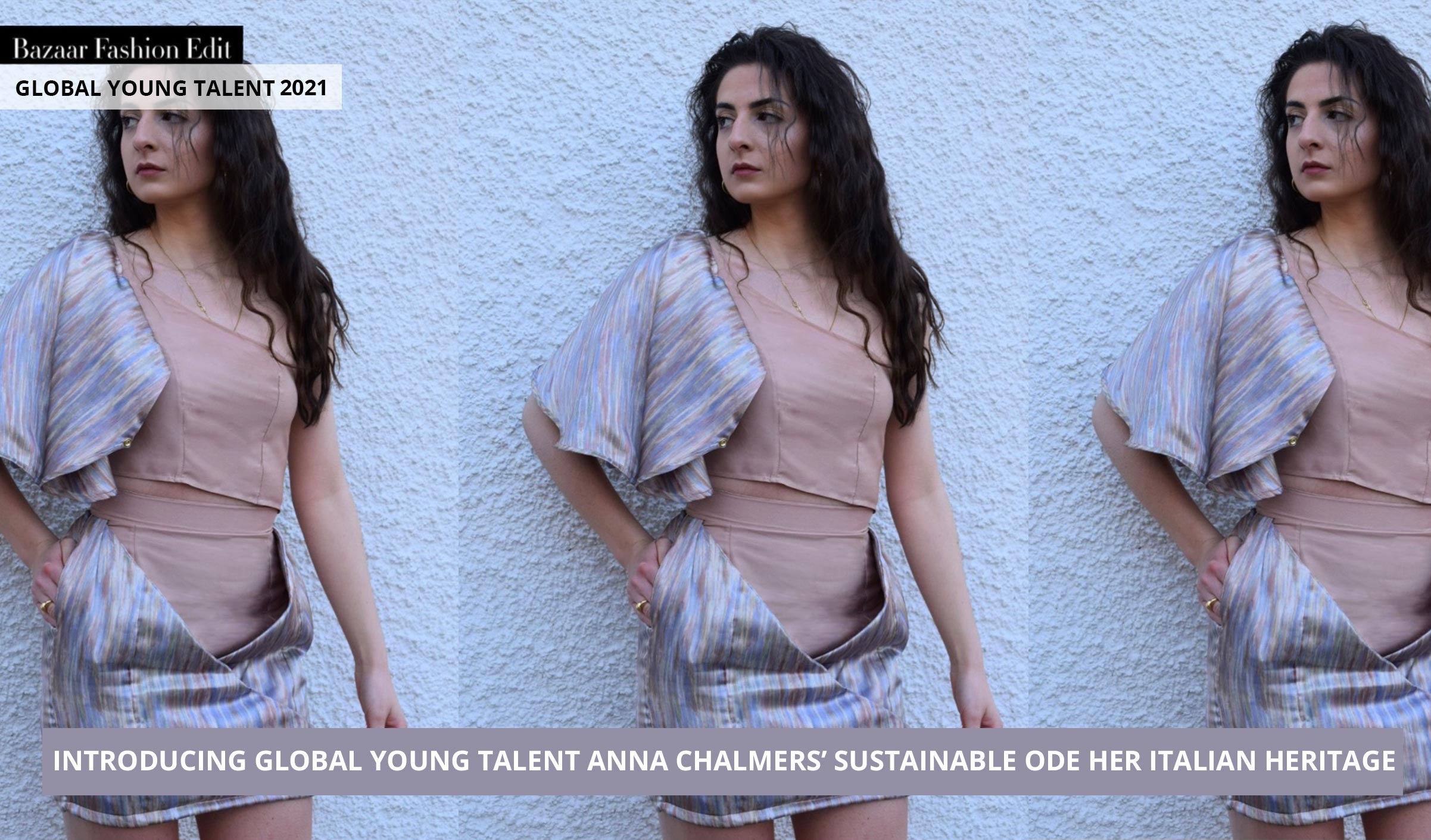

Imagine that one item of clothing can transform into multiple different looks, may it be exactly that which makes Anna Chalmers’ Colori Della Chiesa collection stand out. Eliminating the need to physically change into a different garment, each of her designs allows the wearer to covert it into a completely new piece. Taking inspiration from her Italian heritage, she explores the need to dress modestly while visiting religious buildings and sparely to beat the heat. Her innovative designs landed her a spot among our Global Young Talents in the June issue of Harper’s Bazaar UK!
The idea of using transformative techniques within clothing is to create multiple functional styles within one garment/outfit. The ability to convert one outfit into another without having to remove garment panels or the need of physically changing into another garment sparked an interest in me. This is due to creating a sustainable alternative to purchasing several garments. As longevity properties are considered within my collection, each style can be worn by any age or religion and by simply transforming the outfit into the style the wearer desires. For my Honours project, the idea was to create a collection with a focus on the function of a garment and how it can be newly marketed to the industry.
From a young age, my family and I would visit Italy regularly in the summer months, touring the famous cities where my mother would reminisce on times she visited her family’s hometowns. As I have grown up, I have become more aware of the Italian culture which has created interest in myself to explore further. Since hearing stories from my mother and nonna about living in Italy and seeing photographs of their fashion such as what they wore to attend Sunday Mass sparked curiosity. As like many European cities and Middle Eastern countries when attending Mass or entering any religious building, it is a requirement to dress modestly by ensuing shoulders and knees are covered. Experiencing this myself when my family would visit the Vatican in Rome whilst touring the city, the struggle of dressing for strong heat as well as dressing modestly to tour religious buildings created difficulty in order to follow the rules respectively. With noticing many tourists opting for a change of clothing or a shawl to cover themselves, it inspired me to create transformative wear to tackle this idea by converting a more exposed garment into modest clothing.

“ The idea of using transformative techniques within clothing is to create multiple functional styles within one garment/outfit. The ability to convert one outfit into another without having to remove garment panels or the need to physically changing into another garment sparked an interest in me. ”

My research was predominately focused on cathedrals/churches with the architecture, colours, paintings and design features visible inside them. As this is where my main inspiration for the design aspect of my collection stemmed from, it was important for me to show this throughout my designs. I found that the palette of deep blues, reds and green hues were the main dominant colours shown throughout the renaissance artwork and stained glass. The opulent golds, neutral tones found from the sculptures and the building itself were also greatly inspiring. My idea was to combine the colours together through a watercolour effect print to mimic the idea of the artwork shown throughout the religious buildings.
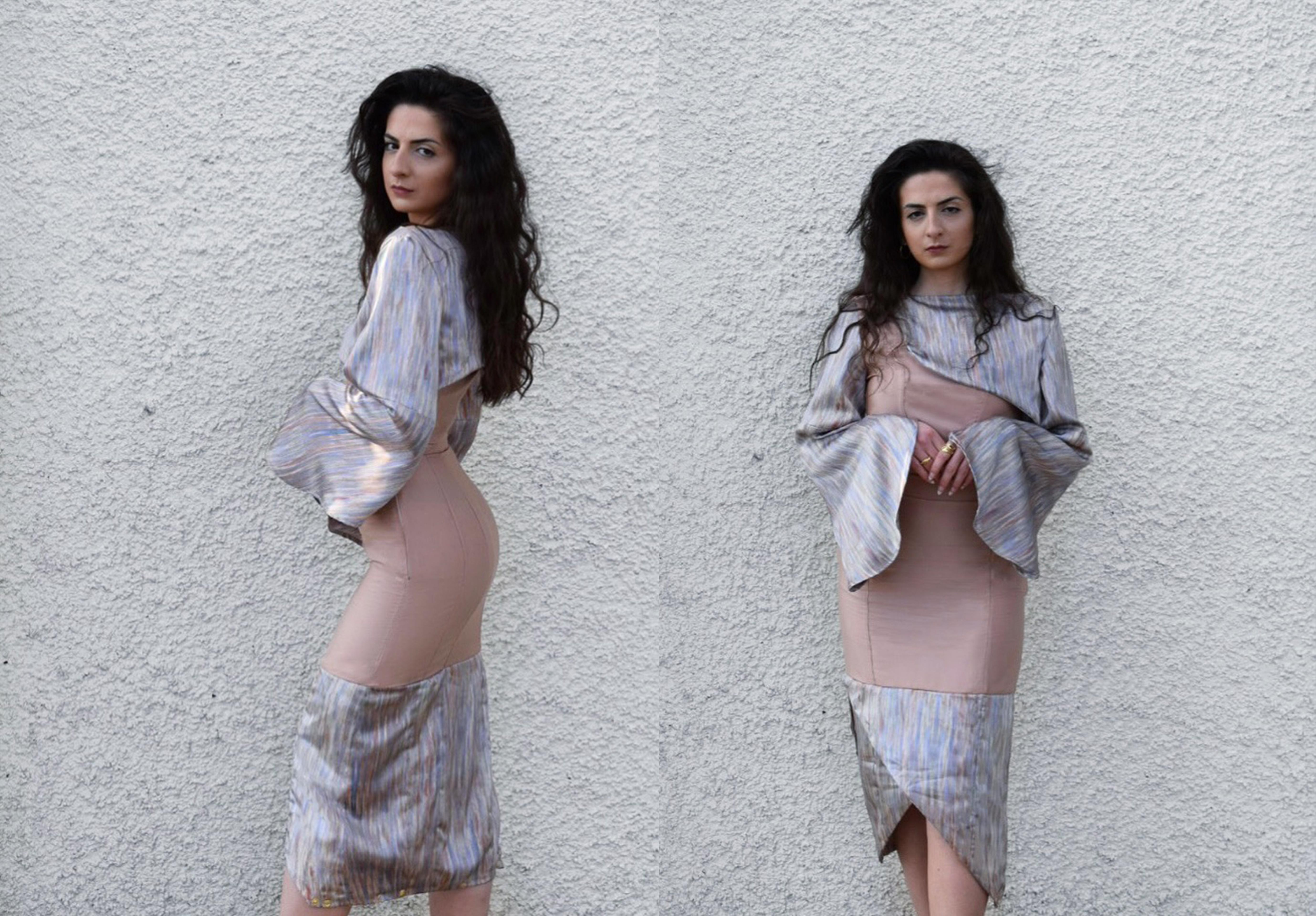
Throughout my time studying at Heriot-Watt University, I have gained a varied skillset from working between both womenswear and menswear. When it came to deciding what field to venture into for my final year project, it was comforting to know I had the ability to work to both fields. I opted to create womenswear due to the idea of the collection relating to myself and the women in my family the most. As a fashion technologist student, the focus in each of our briefs throughout the years has been dependent on the functionality of garments in order to create for a purpose/reason. This provided me with strong knowledge in pattern cutting which was extremely beneficial when designing transformative wear as each converted style had to be functionally accurate in order to transform seamlessly. The last year has been extremely challenging due to the COVID-19 pandemic and full home working throughout the year. However, it has been satisfying to see myself grow independently as a designer by enabling me to tackle and solve problems myself individually.
“ The last year has been extremely challenging due to the COVID-19 pandemic and full home working throughout the year. However, it has been satisfying to see myself grow independently as a designer by enabling me to tackle and solve problems myself individually.”
Discover Anna Chalmers's full collection
Words by Lupe Baeyens