
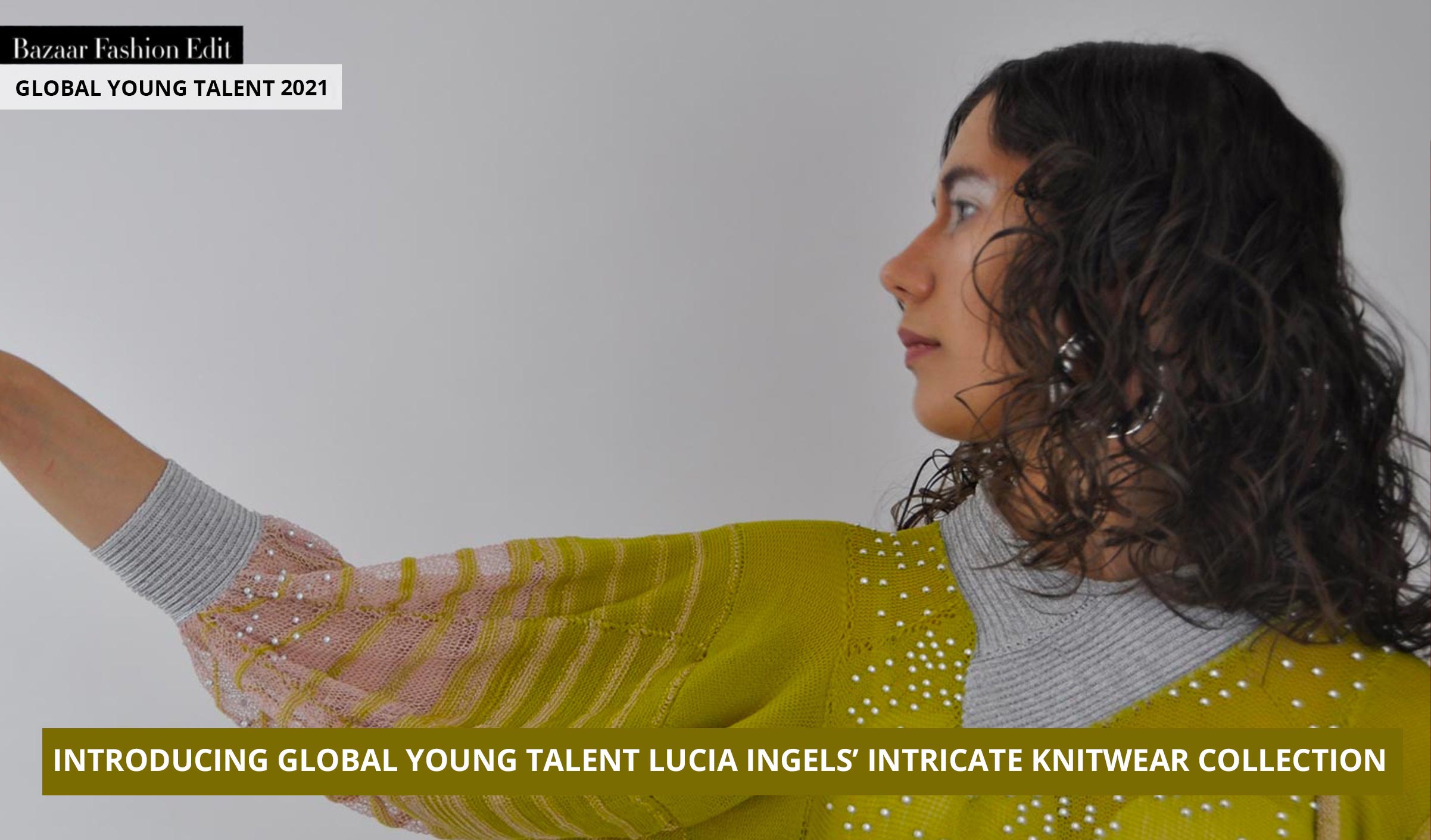

Exploring the therapeutic use of textiles and the influence that colour and texture has on mental health is fashion designer Lucia Ingels. As she reworks versions of classic knitting techniques, the designer incorporates complex math-based pattern cutting, setting her work apart. As part of our Global Young Talent, Lucia has seen her work featured in the March issue of Harper’s Bazaar. Read on to discover how she combines her interesting and varied cultural background in an innovative knitwear line-up.
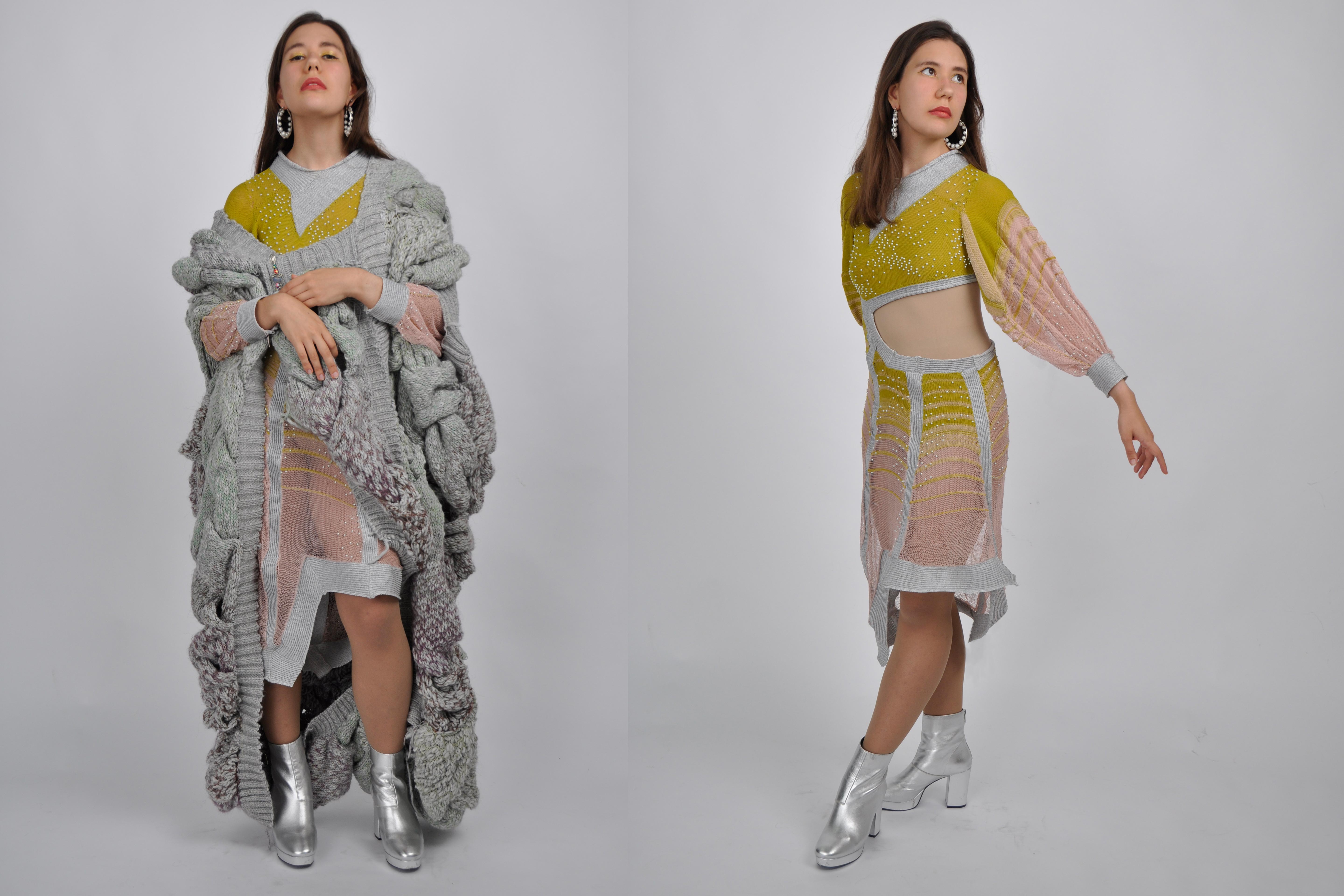
I wrote my dissertation on how clothing influences wellbeing, which led to me researching Deep Pressure Touch Stimulation when aided by weight and compression as well as touch and colour. The clearest translation of my research is the use of colour – soft greys and greens are widely accepted as calming colours, and in using yarns such as polypropylene and matte viscose could add the element of a soft touch. My coat primarily uses DPTS as its therapeutic aspect. The weight helps ‘ground’ the wearer, it’s huge and is really great to burrow under and keep warm. The collection isn’t designed to show people how poor mental health feels, but actively aid people create a more calm and positive environment for themselves.

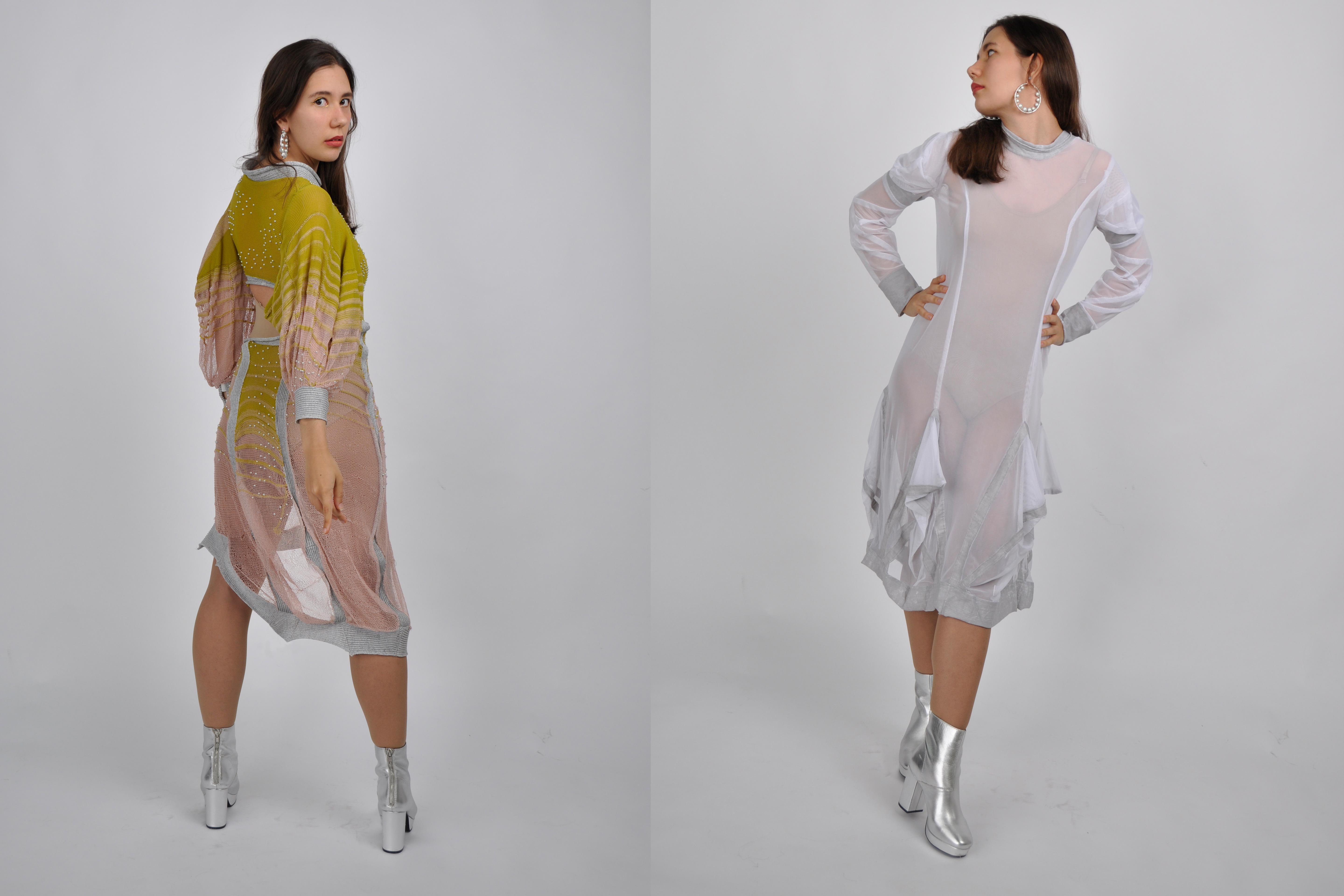
I’m South African-Belgian, which is already an unusual mix, but since I moved to England at a young age, I don’t feel that I have a solid place on which to stake my identity. It used to bother me, but now I feel it’s advantageous because I can blend all the different aspects of my heritage to create unique and very personal designs. I feel that my heritage comes through best in my sheer garments; I looked at Belgian lace, which was the inspiration for my knit’s textures, South African (Ndebele) beading, and the colour scheme is lifted directly from the Protea, South Africa’s national flower, and the English countryside where I grew up.
“I feel that my heritage comes through best in my sheer garments; I looked at Belgian lace, which was the inspiration for my knit’s textures, South African (Ndebele) beading, and the colour scheme is lifted directly from the Protea, South Africa’s national flower, and the English countryside where I grew up.”
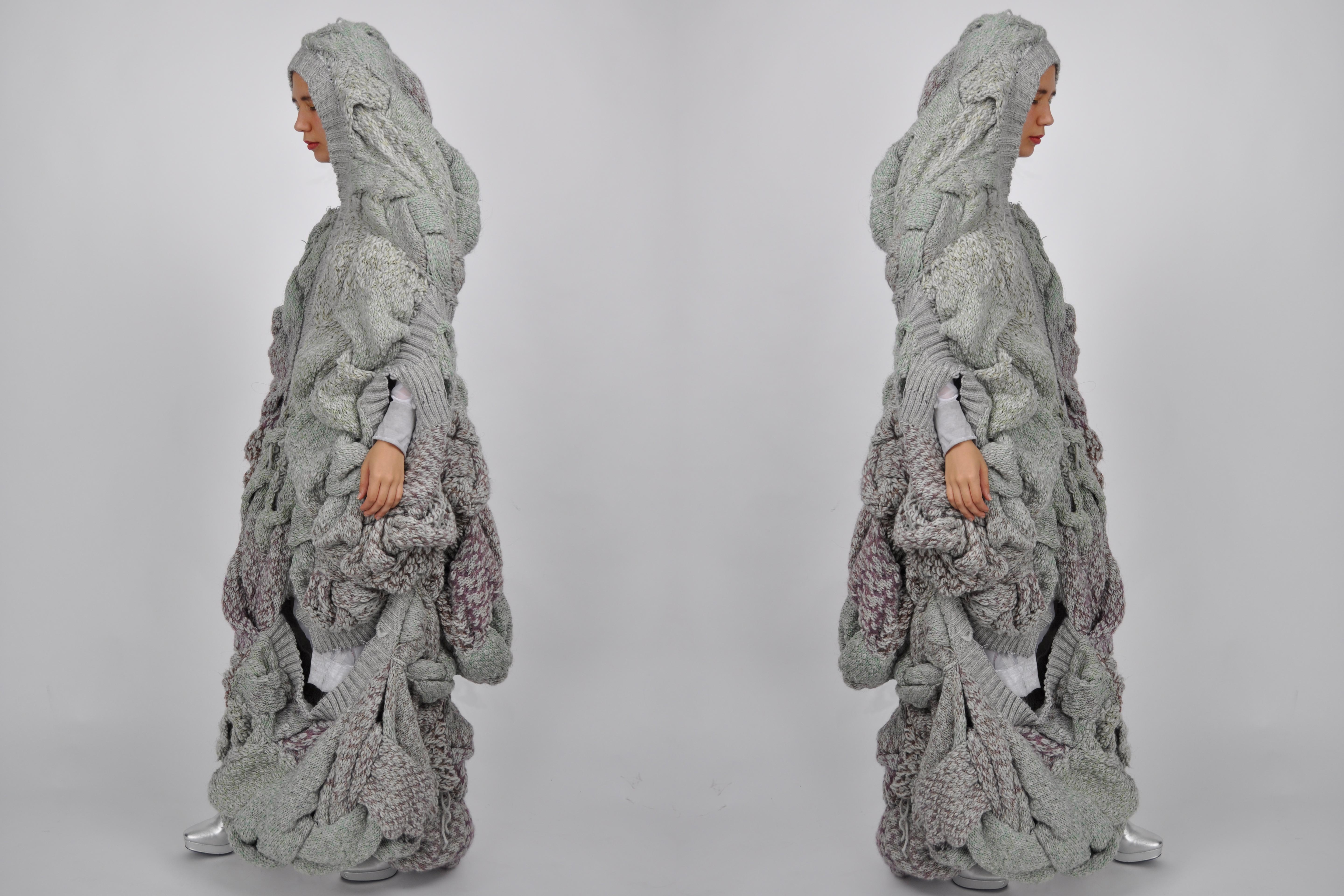
I’d been hand-knitting for a few years before I started my BA, but at university, I instantly fell in love with flat-bed knitting. There was no debating I would knit my final collection. With knitting, you have complete control over how your work looks; the colours, textures, surface decorations, matte/gloss, thickness and beading - you can quite literally create something no-one else has. I think knitting can get a bad rap, as we’re so used to seeing boring stripy jumpers that your granny makes, but it can be used to make anything from haute couture dresses to sculptural origami-like pieces.
As well as learning design, pattern cutting and knit, I think the most important things I learned at university was confidence in myself, and learning how to be happy. Going to university is a big shock to the system as everything moves faster, more is expected of you, and the tutors are not afraid to literally tear your work apart. I think the three pieces of advice I’d give to new students would be: Don’t be afraid to experiment Don’t take criticism personally, tutors are there to push and further your skills, they’re not being mean Be kind to yourself, take regular breaks
“Don’t be afraid to experiment Don’t take criticism personally, tutors are there to push and further your skills, they’re not being mean Be kind to yourself, take regular breaks. ”
Discover Lucia Ingels' full collection
Words by Lupe Baeyens